Forty-three rackets from seven brands are on our shelf as we write this, from a $140 beginner frame to Juan Lebrón's signature diamond. These are the ones we would actually put in your hand, by the kind of player you are — with the reasons, the trade-offs and the one we would steer you away from in each category. Every price and stock flag below is live.
The short list
| If you are… | Our pick | Also look at |
|---|---|---|
| Playing your first season | Babolat Counter Origin | Dunlop FX Start (cheaper), Babolat Counter Vertuo 2.6 (lasts longer) |
| An improving all-court player | Babolat Air Vertuo 2.6 | NOX NextGen Pro Hybrid 12K |
| Starting to finish points, on a budget | Dunlop FX Team | Babolat Technical Origin+, Tecnifibre Bomba Soft |
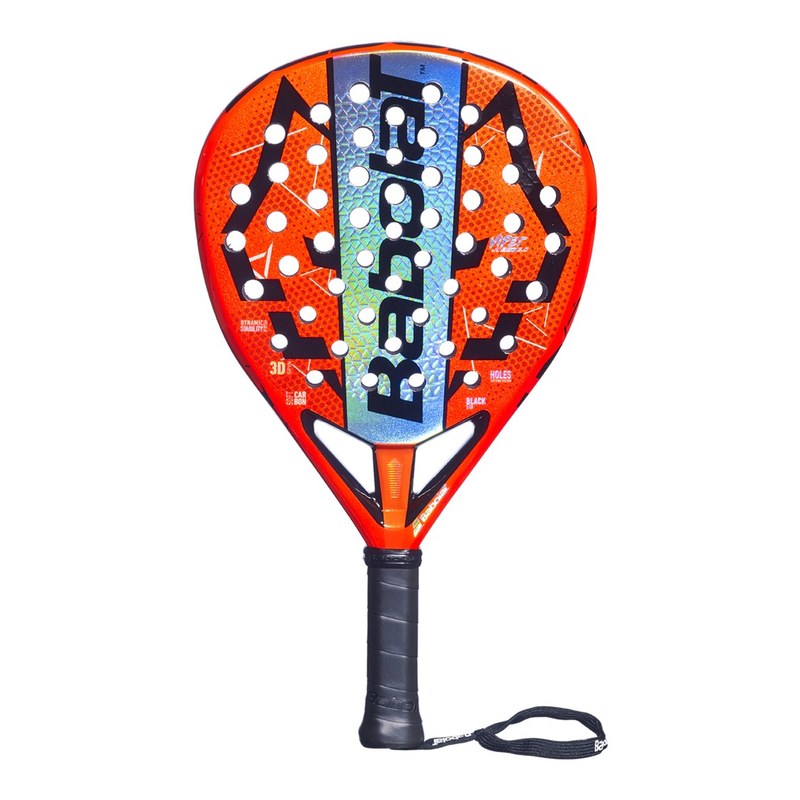
| An advanced attacker | Babolat Technical Viper 3.0 | Siux Fenix Pro 2026, Tecnifibre Bomba Max |
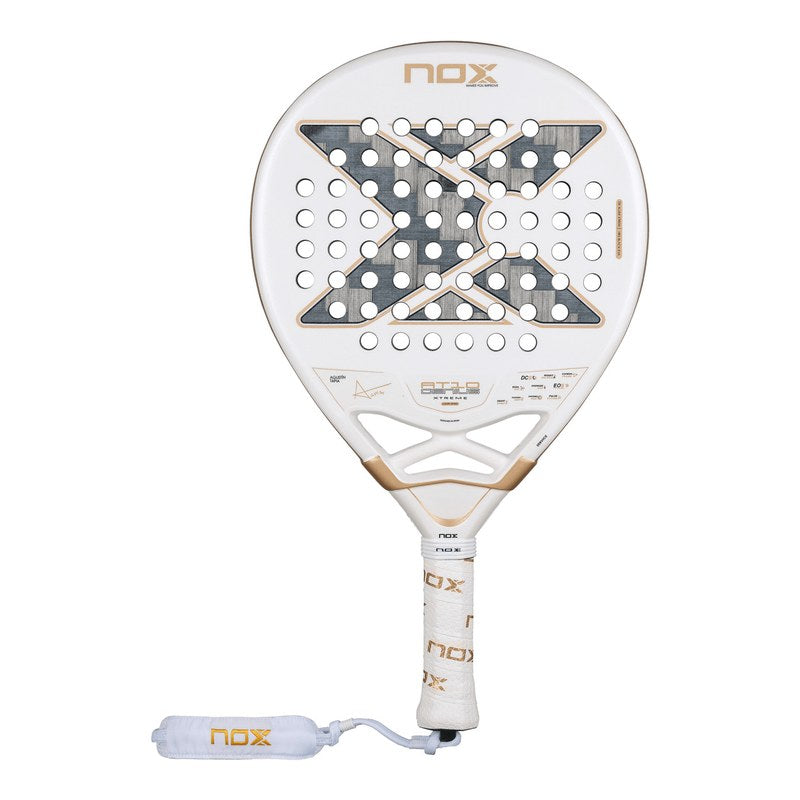
| An advanced all-court player who hates specialising | NOX AT10 Genius 18K Alum | Siux Diablo Pro 2026 |
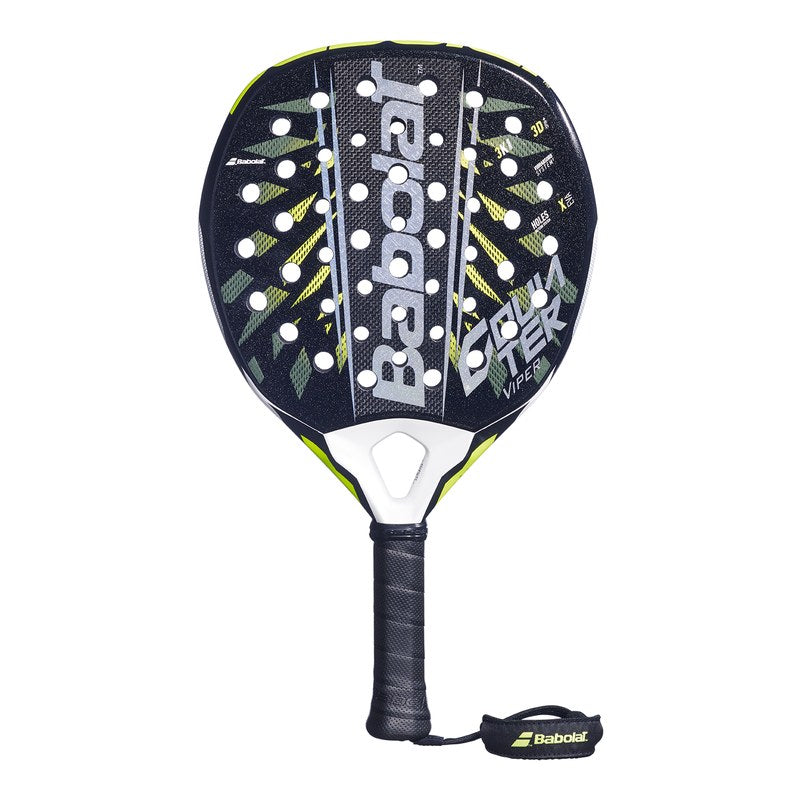
| A defender, or you play the right side | NOX ML10 Ventus Control | Babolat Counter Viper 2.6 |
| Managing an elbow or shoulder | NOX ML10 Ventus Control | Babolat Counter Vertuo 2.6, Babolat Technical Viper Soft 3.0 |
| After the most racket for the money | Dunlop FX PRO | Siux Electra ST4 Pro (run-out) |
| Coming across from tennis | Tecnifibre Curva Speed | Babolat Air Vertuo 2.6 |
| Buying the racket your favourite pro plays | NOX AT10 Genius 12K Alum Xtrem (Tapia) | Babolat Viper Juan Lebrón 3.0, Siux Electra ST4 Pro (Stupaczuk) |
How we picked
We are a shop, so read this with that in mind: every racket on this page is one we sell. Within that, the picks come from three things. The manufacturer's published specification, which we list in full on every product page and which tells you more than any review once you know how to read it. The independent playtests we could find for each model, which we cite and score on the product page and which we quote here where they exist — and say so where they do not. And the plain geometry of the sport: a round head is forgiving, a diamond is powerful and unforgiving, weight and balance decide how the racket feels in the third set, and no marketing changes any of that. We do not have demo rackets and we have not court-tested all forty-three ourselves, so where a claim is a manufacturer's rather than a tester's, we label it.
New to how shape, weight and material work? How to choose a padel racket is the ten-minute version; round vs teardrop vs diamond is the three-minute one.
Best padel racket for beginners
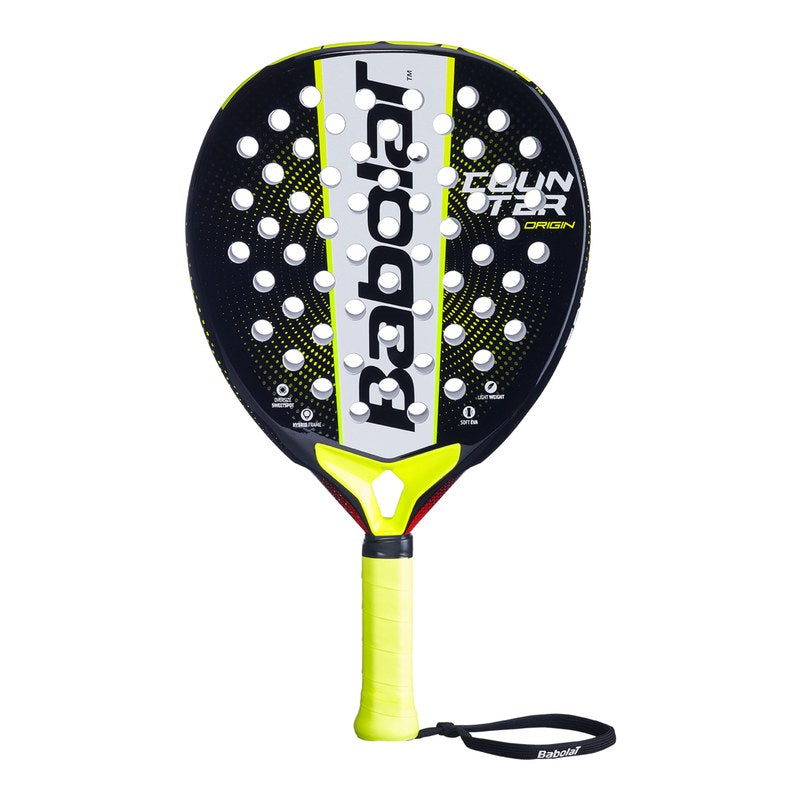
Babolat Counter Origin. Round head, fibreglass face, soft EVA core, about 355g with a handle-biased balance — every one of those choices is the forgiving one. Babolat's own line is that it is the control racket you need to step on court for the first time, and the one independent test we found agrees, scoring it 7.8 on a beginner scale with forgiveness and sweet spot its highest marks and power its lowest. That last number is the honest trade: this racket will not manufacture pace, and a player who improves quickly may outgrow it in a year. That is also what a first racket is for.
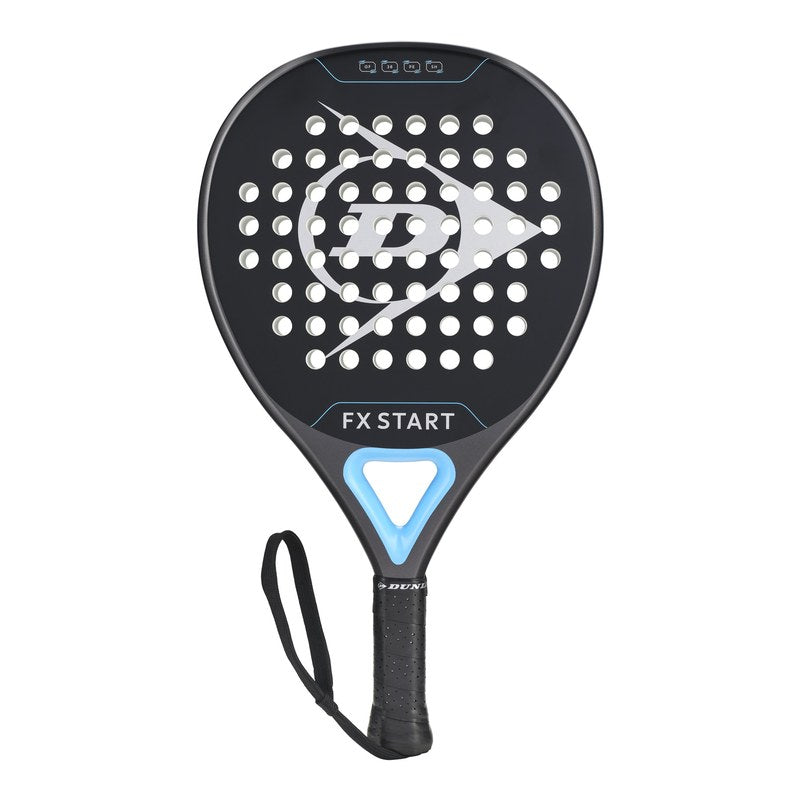
Also look at. The Dunlop FX Start is cheaper still and runs the same Pro-EVA core as Dunlop's flagship, in a hybrid head with a medium balance; the core is firmer than the Babolat's, so it is the less gentle of the two on an arm. If you would rather buy once, the Babolat Counter Vertuo 2.6 costs more but scores 8.2 in independent testing with comfort at 8.5, and it is the beginner racket we would still expect you to be using in your third season.

Every beginner racket we stock, compared →
Best padel racket for intermediate players
Babolat Air Vertuo 2.6. A 345g teardrop with a 265mm neutral balance, a soft Black EVA core and a fibreglass face, and the best-scoring racket in its price band that we could find an independent test for: 8.4 overall, with manoeuvrability at 9.0 and comfort at 8.6. The tester's phrase was that ball exit is dynamic rather than explosive, and power is the lowest number on its card. If you win points by getting to the ball and putting it where the other pair is not, that is the right shape of score. If you win them with a smash, it is the wrong racket, and we would rather say so here.
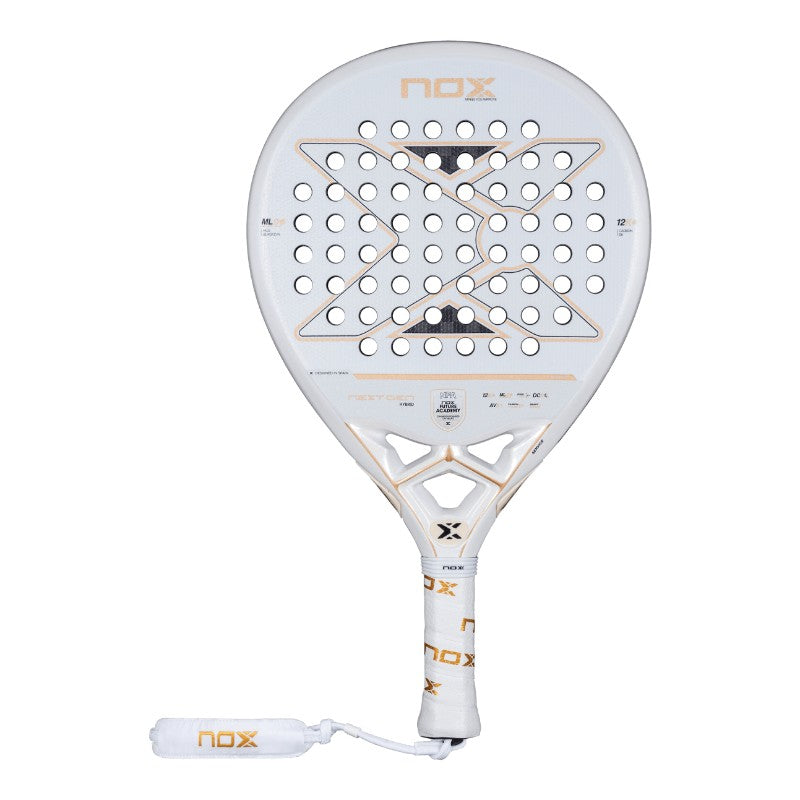
Also look at. The NOX NextGen Pro Hybrid 12K is the step up in materials — 12K carbon face, multi-density Black EVA core, NOX's Dual Spin surface — for a player who wants a firmer, more direct frame that still keeps the sweet spot central. No independent playtest exists for it yet, so that recommendation is from the specification.

Best power racket for improving players
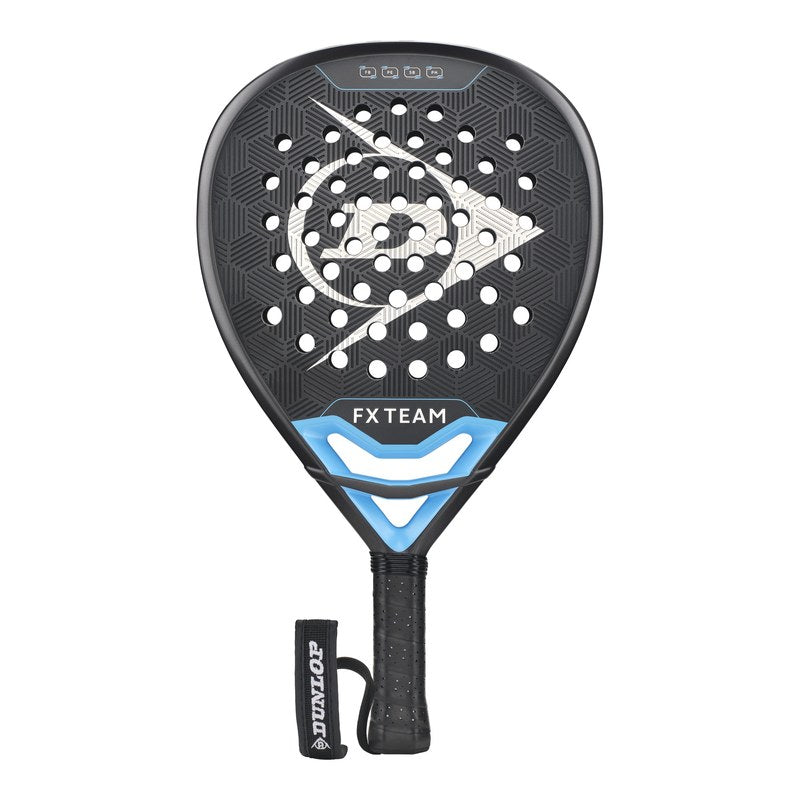
Dunlop FX Team. The FX PRO's diamond head, Pro-EVA core and 38mm profile, 5g lighter and on a medium rather than a high balance, for roughly two-thirds of the price. The medium balance is the whole point: it is what lets an intermediate player swing a diamond for two hours without the head arriving late. What you give up against the PRO is the Infinergy inserts, the Vibroshield damping and the 12K face, so it is a firmer, less damped frame — fine if you are 30 and hitting twice a week, worth thinking about if you are not.
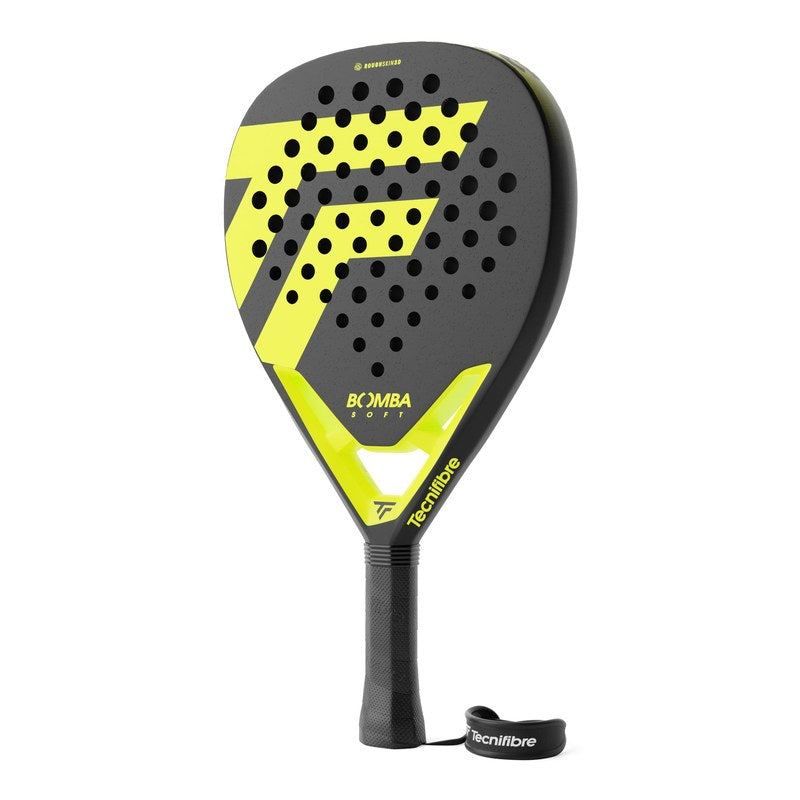
Also look at. The Babolat Technical Origin+ does something unusual: a diamond head built from soft materials (fibreglass face, EVA core, hybrid frame) so you get the attacking shape without the carbon diamond's punishment. Nobody has independently tested it, so that is Babolat's account. The Tecnifibre Bomba Soft is the diamond for a player whose arm is the deciding factor — single-piece soft foam core and a fibreglass-carbon face, and Tecnifibre's own pitch is comfortable explosive power. Padel Magazine's hands-on found it noticeably more forgiving than the Bomba Max.

Best padel racket for advanced attackers
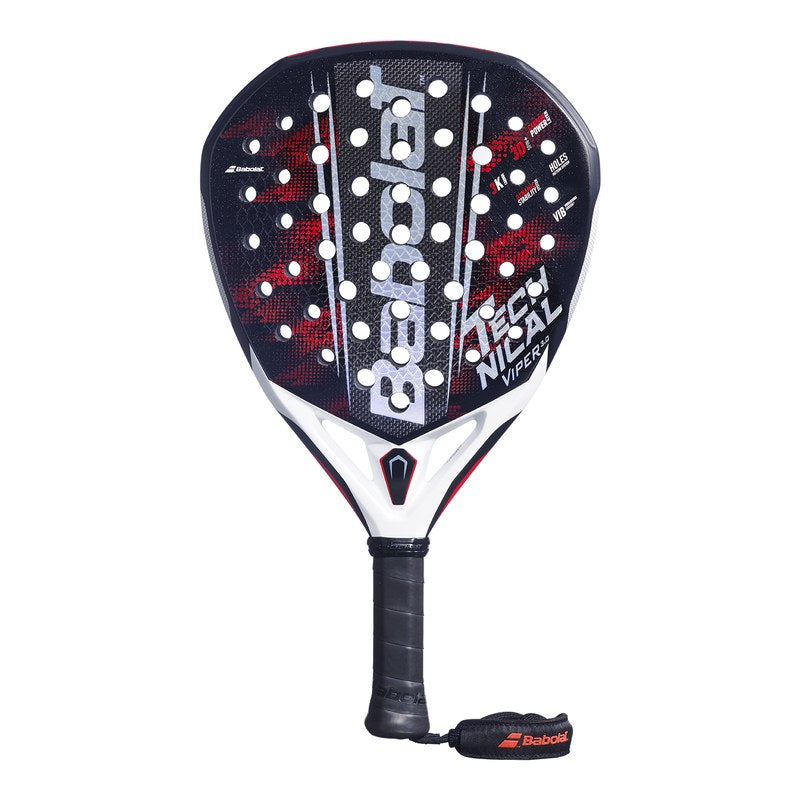
Babolat Technical Viper 3.0. Our best-selling advanced racket and the frame the Viper family is built around: a hard EVA core with a carbon sheet laid through it, 3K carbon face with the 3D Spin+ raised finish, 360–375g on a high balance. It hits as hard as anything we stock and it punishes off-centre contact accordingly. Vibrabsorb System² takes the sting out without softening the response, which is a different thing from making it comfortable. For a player whose technique is repeatable, it is the one.
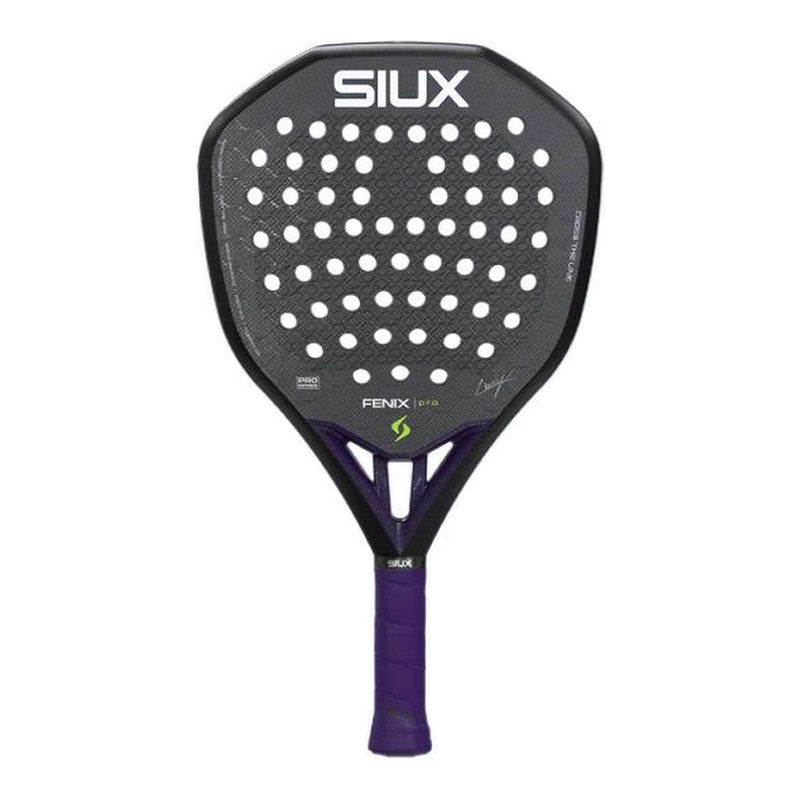
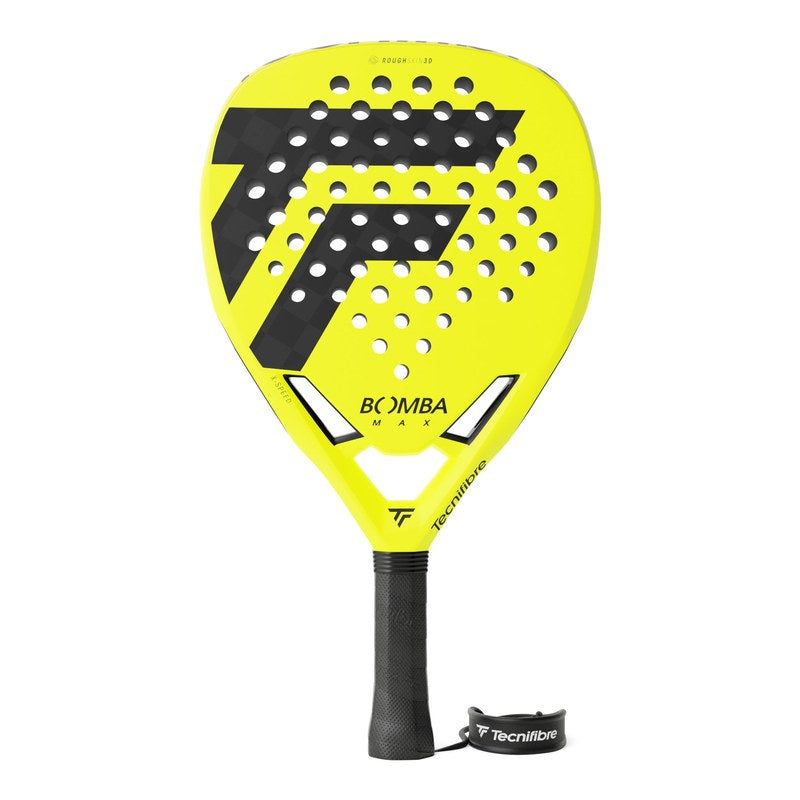
Also look at. The Siux Fenix Pro 2026 is the same idea from Spain: a 12K carbon diamond on the hardest core in Siux's catalogue, designed with Leo Augsburger. PadelZoom scored it 8.5 with power at 10 and control at 9, and called it a racket without half measures; the same test rated ball exit in defence low. The Tecnifibre Bomba Max is the softer-cored alternative — a three-layer foam core under an 18K face, with a sweet spot Tecnifibre say is 7cm² larger than the equivalent Curva. Still a demanding, head-heavy diamond; not the one for a sore arm.
Every power racket we stock, compared →
Best all-court racket for advanced players
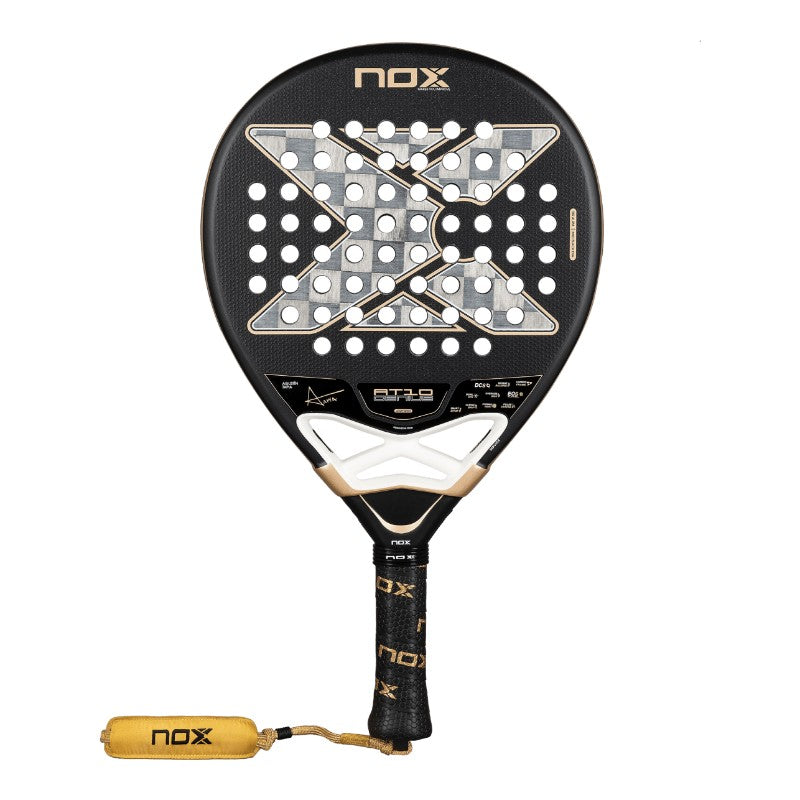
NOX AT10 Genius 18K Alum. Agustín Tapia's signature frame and the flagship of the NOX range. Every credible measurement rates control above power (around 8.5 against 7.5), stability is consistently its strongest attribute, and two independent measured reviews describe the sweet spot as generous and central. The forgiveness is asymmetric — good low on the face for defence and bandejas, less so high — which is what people mean when they call it demanding. It is also, on the evidence, kind on the arm: multi-layer core, Pulse System damping, and the measured review we trust most calls it a safe choice for players who have had padel elbow. The 2026 model adds interchangeable 2g and 4g counterweights so you can move the balance yourself.
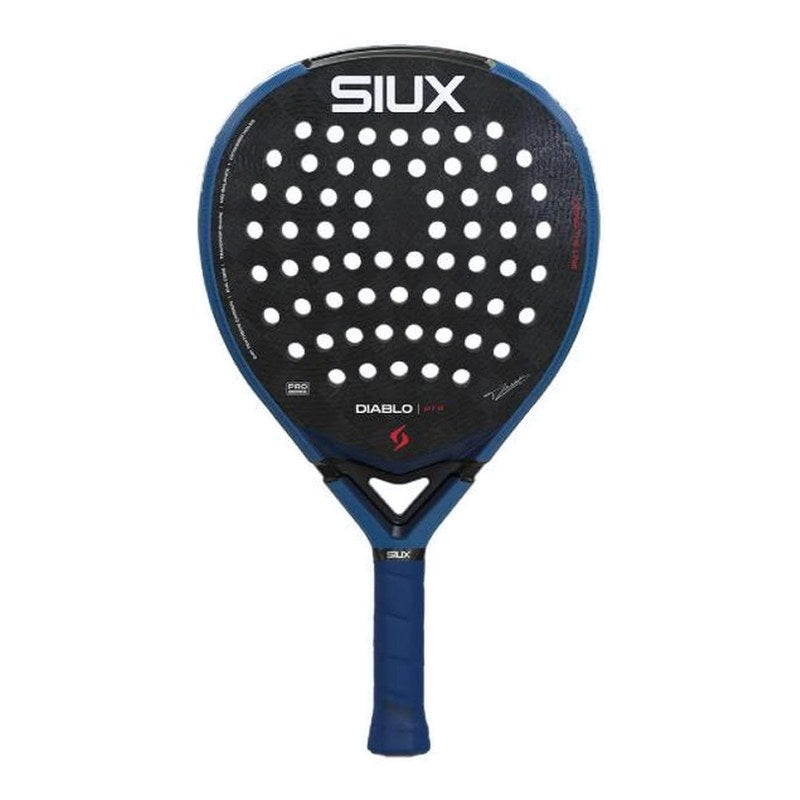
Also look at. The Siux Diablo Pro 2026, Tino Libaak's racket: a 24K TeXtreme teardrop that PadelZoom scored 8.6 with an even 8.5 across power and control and 9.0 for ball exit, and called truly versatile. It is drier and crisper in the hand than the NOX; touch shots take some adapting.
Best control racket, and best for a sore arm
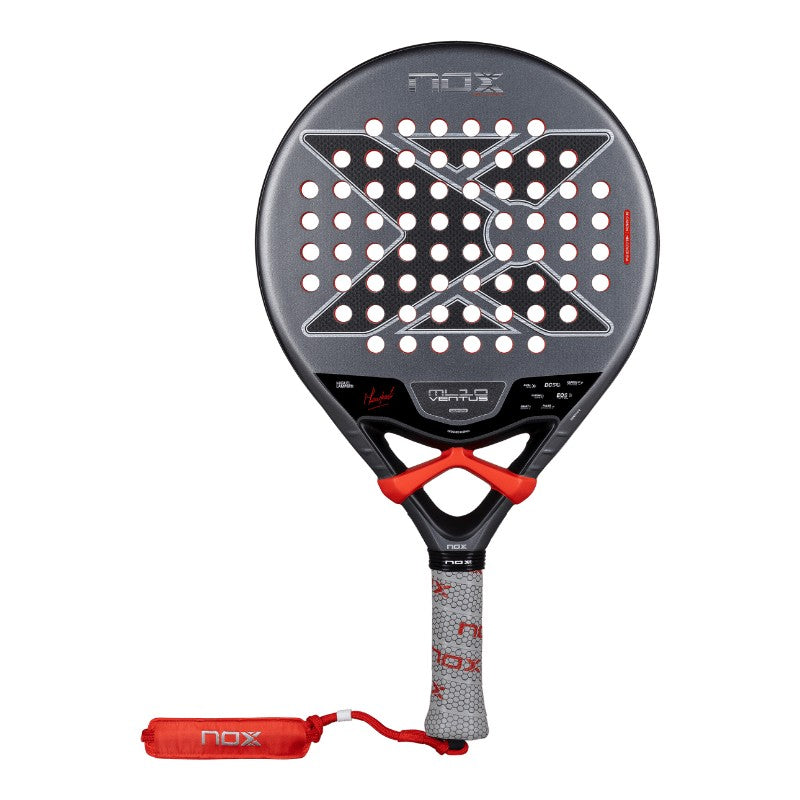
NOX ML10 Ventus Control 3K. One pick for two categories, because it earns both. Miguel Lamperti's round-headed frame is built the way he plays: sweet spot low and central, everything organised around keeping the ball in play until the point is winnable. The one genuine playtest scores it 75/100 with comfort 8 and power 6 and is explicit that it is not a racket for an aggressive finisher — winners have to be designed rather than hit. On the arm it is the racket in our range with actual evidence behind the label: Pulse System damping in the handle, independent testing that found it low-fatigue, and measured stiffness at the soft end of the market. No racket is a treatment, but if you are managing elbow or shoulder load, this is where we would start you. Padel and tennis elbow: what the gear can and cannot do →
Also look at. The Babolat Counter Viper 2.6 is the control frame for a player who still wants carbon bite: round head, three-layer X-EVA core, 3K face with 3D Spin+. For arm comfort at a lower price, the Babolat Counter Vertuo 2.6 (above) scores 8.5 for comfort. And if you play a diamond and your elbow has started complaining, the Babolat Technical Viper Soft 3.0 is the same power geometry on a soft black EVA core — the one to look at before you give up the shape.
Every control racket we stock, compared →
Best value padel racket
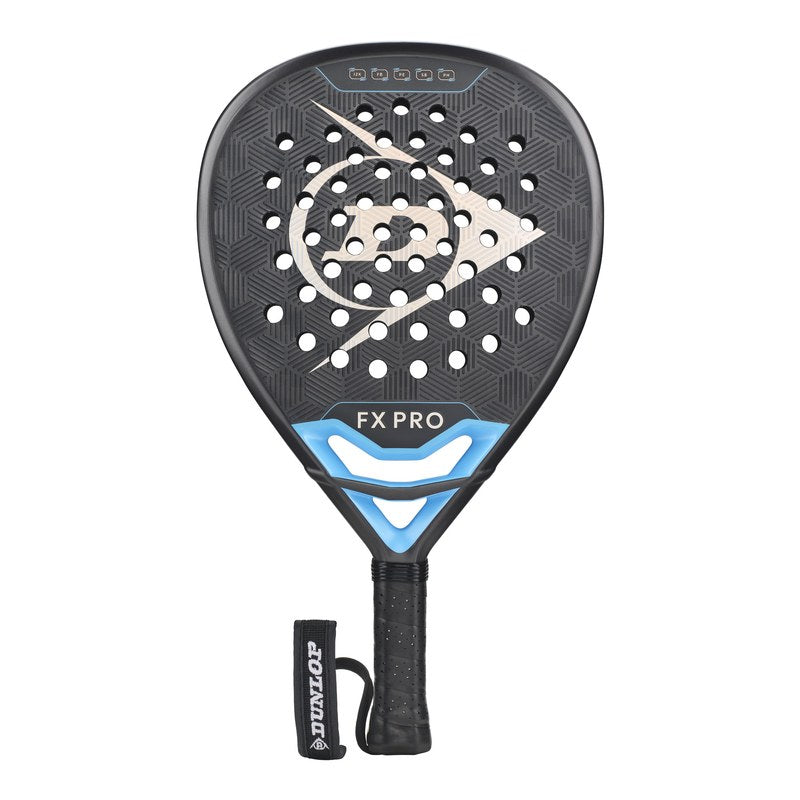
Dunlop FX PRO. The most technology per dollar on our wall: a 370g diamond with a 12K carbon face, Infinergy inserts at three and nine o'clock, a Vibroshield damping layer, Force Bridge, Spin Boost and Power Holes — all eight of the systems Dunlop name on the FX line — for less than most brands charge for their intermediate frames. The catch is in the geometry rather than the price: 370g, high balance, firm Pro-EVA core is the least forgiving layout in the sport, and no amount of damping changes what happens when you catch one late. An advanced racket at an intermediate price, not an intermediate racket.
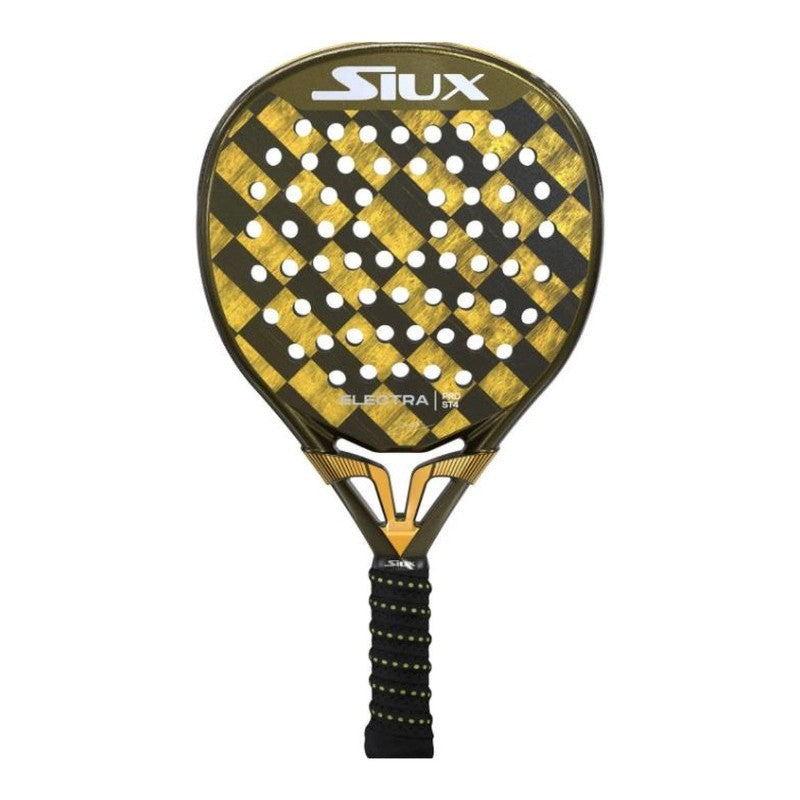
Also look at. The Siux Electra ST4 Pro is Franco Stupaczuk's 2025 signature frame, now run-out priced because the 2026 Electra has replaced it. The spec did not get worse in the meantime: 15K carbon face, black EVA core, a teardrop PadelZoom scored 8.7 with 9 for power, 9 for control and 9 for manoeuvrability. While the stock lasts it is the best racket per dollar we sell, and the reason it is not the headline pick is only that it will not be here in a few months.
What a padel racket costs in Australia, and what each price band buys →
Best padel racket if you are coming from tennis
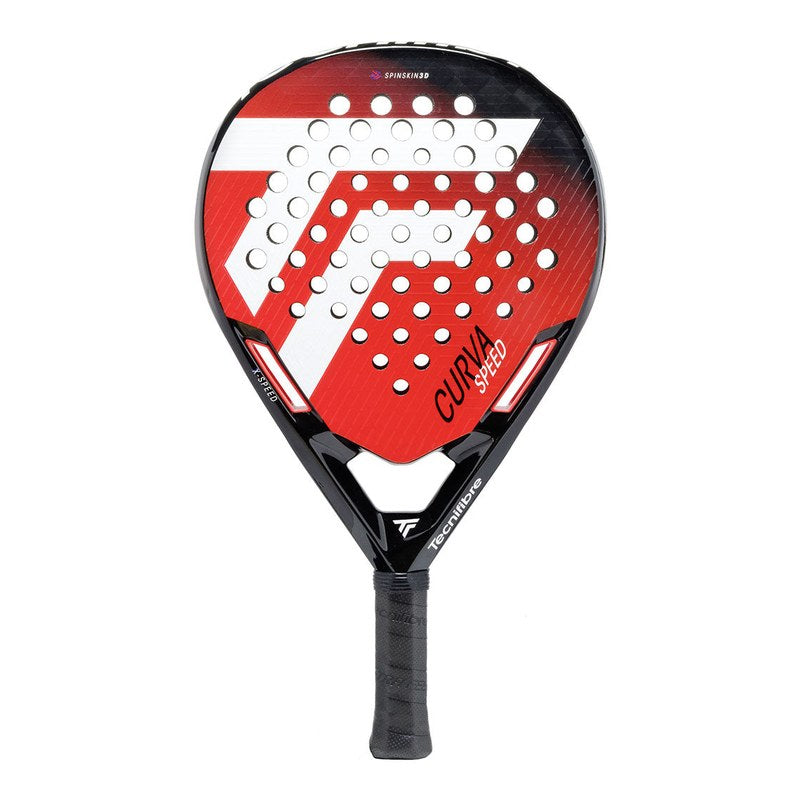
Tecnifibre Curva Speed. Tennis players arrive with a fast, long swing and a habit of hitting through the ball, and the racket that suits them is light, manoeuvrable and teardrop-shaped — forgiving enough to survive the first month of hitting the back glass too hard, quick enough to feel like a racket rather than a paddle. The Curva Speed is Tecnifibre's most manoeuvrable Curva: 355g, neutral balance, a 16K carbon face over a foam core, with the X-Speed side channels that Tecnifibre claim help players guide trajectory. Padelguru scored it 8.4 with manoeuvrability 8.7 and a sweet spot they called generous for a teardrop. Tecnifibre is a tennis brand, which will not make you a better padel player but does mean the handle will feel familiar. What actually changes when you switch →
Also look at. The Babolat Air Vertuo 2.6 (above), for the same reasons and a smaller bill.
Best signature rackets — what the pros actually play
Two things worth knowing before you buy a racket because a professional's name is on it. First, the brands say it themselves in the small print: sponsored players may compete with frames that differ from the retail model. Second, the pros' rackets are built for the pros' technique, and most of them are the least forgiving frame in the range. With that said:
NOX AT10 Genius 12K Alum Xtrem is the racket Agustín Tapia, the joint world number one, actually plays — the firmer, more explosive twin of the 18K above, same mould and same price. PadelZoom 8.7, PadelRacketReviews 91/100. Babolat Viper Juan Lebrón 3.0 is Lebrón's flagship: a 370g diamond with a firm black EVA core and Babolat's Carbon Power Layer, for a player who finishes points and finds the middle every time. Siux Electra ST4 Pro (above) is Stupaczuk's 2025 frame at a run-out price.
By budget
| Budget | What it buys | Our picks |
|---|---|---|
| Under $200 | Fibreglass faces, EVA cores, forgiving shapes. A proper first racket, not a toy. | Dunlop FX Start, Babolat Counter Origin, Dunlop FX Team |
| $200–$300 | The best value in padel: carbon faces start here, and so do the independently well-tested frames. | Babolat Air Vertuo 2.6, Babolat Counter Vertuo 2.6, Dunlop FX PRO, Siux Electra ST4 Pro |
| $300–$450 | Performance-tier frames with the brand's real technology: multi-layer cores, 12K–18K faces, named damping systems. | NOX NextGen Pro Hybrid, Tecnifibre Bomba Soft, Tecnifibre Curva Speed, Babolat Technical Viper Soft, Tecnifibre Bomba Max |
| $450 and up | The pro-tier and signature frames. You are paying for the top carbon, the top mould and the name; you are not paying for forgiveness. | NOX AT10 Genius (12K or 18K), NOX ML10 Ventus Control, Babolat Technical Viper 3.0, Siux Diablo Pro, Siux Fenix Pro, Babolat Viper Juan Lebrón |
Prices move — run-outs, supplier floors and the odd sale — so the cards above are the truth and the bands are a guide. Everything we sell has the manufacturer's full specification on its page, and the compare tool puts any two side by side.
The ones we stock but did not pick, and why
Not because they are bad. The Siux Pegasus Elite 4 and Diablo Elite 6 are good club-level teardrops — the Elite 6 in particular scored 8.4 with PadelZoom for a very easy ball exit — but at Australian prices they sit close to the Pro frames above them, and we would rather you bought the Pro or saved the difference. The NOX AT10 Genius Attack 12K is the most demanding racket NOX make; if you are choosing between it and the teardrop Xtrem, the teardrop is the safer buy. The NOX EA10 Ventus Hybrid is an excellent advanced all-court frame that loses to its stablemate the AT10 only on the evidence for comfort. The Babolat Technical Veron 3.0 and the Veron Juan Lebrón are sensible intermediate frames that we would recommend one-to-one but that did not beat the Air Vertuo on test scores. The Tecnifibre Bomba Speed and Curva Power are both good; the Speed and the Soft simply cover their ground for more players. The Babolat Air Viper 2.6 is the fast, aerial attacker's racket — PadelRacketReviews 88/100 — and if you live at the net it may be your pick over the Technical Viper.
New this month: Hirostar
Six Italian rackets joined the wall on 23 September 2026 — too late for the picks above to be re-ranked, but worth knowing about before you buy. Hirostar is the Milan brand Tolito Aguirre part-owns. The Alien Pro is his signature diamond: 24K carbon on a hard core, and the one independent test we have found scored it control 9/10 and comfort 6.5/10, which tells you who it is for. The Alien Core is the softer 12K version of the same mould. The Blackstone and Redstone are a pair of 18K diamonds that differ only in balance — the Redstone's medium-low balance is rare on the shape and makes it the quick-hands pick. The Horizon and Solar are the $385 attacking diamond and round control frame. If we were re-cutting this list today the Redstone would be in the advanced all-court conversation and the Solar in the arm-friendly one. The full Hirostar guide →
Also new: adidas
A day after Hirostar, adidas joined the wall — the three 2026 Metalbones and the Drive. adidas padel is made under licence by All For Padel and comes to us through the Australian distributor, so our prices are the distributor's. The Metalbone 2026 is Ale Galán's diamond with adjustable head weights and a Carbon Aluminized 16K face; Padel.how scored it 64/100 with a power ceiling of 9 and comfort of 5, which tells you it is an advanced attacker's racket. The Metalbone HRD+ is the hard-core version Galán actually competes with (70/100, advanced only). The Metalbone CTRL is the round, even-balanced one — 71/100 at Padel.how, and at $499 against a $659 RRP the value pick of the three; if we were re-cutting this list today it would be in the advanced-control conversation. The Drive 2026 ($169, black or blue) is a plain, forgiving round beginner racket that three testers agree you will outgrow, which is the point. The full adidas guide →
Frequently asked
What is the best padel racket brand? There is not one, and anyone who tells you otherwise sells that brand. Babolat has the clearest beginner-to-pro ladder; NOX makes the frames with the most independent comfort evidence; Siux has the deepest Spanish tour pedigree; Tecnifibre's foam cores are the most consistent across temperatures; Dunlop gives you the most technology per dollar; Hirostar, new to the wall in September 2026, is the Italian diamond specialist with the least independent test evidence so far; adidas, which arrived a day after Hirostar, is built around the Metalbone, a diamond whose balance you set yourself with screws in the head. Buy the shape and weight that suit you, then the brand.
How much should I spend on my first padel racket? $140 to $250. Above that you are buying stiffness and power you cannot use yet, and a carbon diamond will make your first season harder, not easier.
Can I try a racket before I buy? Not from us — we are online only, with click and collect at Pacific Fair on the Gold Coast, and we do not run demo rackets. Some clubs do: Ace Padel Clubs at Forest Glen on the Sunshine Coast hires demo frames by the game, and most club pro shops will let you hold what is on their wall. If your club stocks the racket you want, buy it there — hitting with it first beats anything a website can tell you. Where to play, everywhere in Australia →
Do I need a new racket every year? No. Spec barely moves year to year; the paint does. A frame lasts until it cracks or goes soft, which is usually two to four seasons of club padel. When to replace your racket →
Still between two?
Five quick questions, scored against every racket on this page — takes 60 seconds. Same-day dispatch before 1pm AEST from the Gold Coast, free shipping over $99, or collect at Pacific Fair.