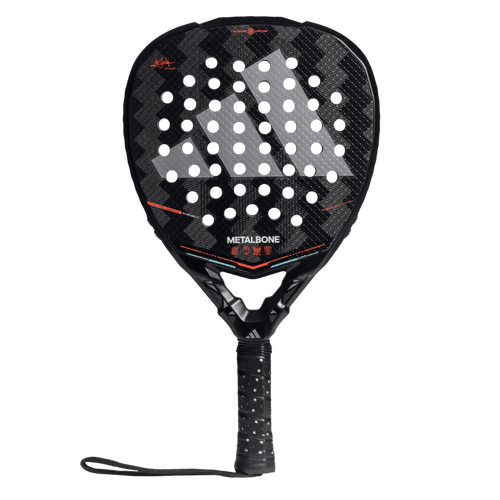
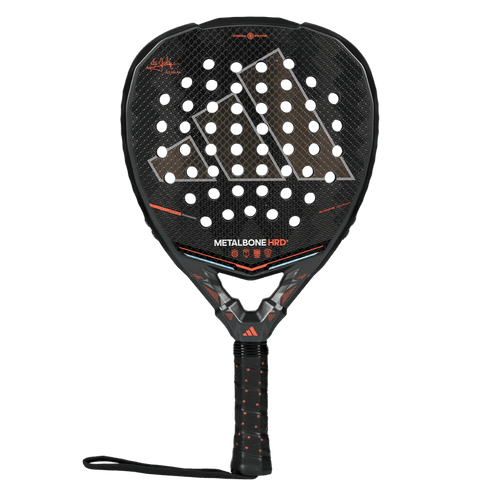
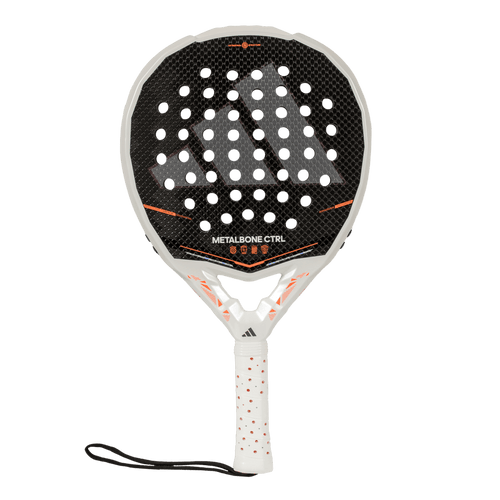
adidas sell three full-specification Metalbones in Australia for 2026 — the Metalbone 2026, the HRD+ and the CTRL — and from the front they look almost identical: same octagonal frame, same 16K face, same screws in the head, same Ale Galán signature. The differences are one core, one head shape and one balance point, and between them they decide whether you still like the racket in a month. This guide sets the three side by side on the verified specs and the independent scores; all three share a $659 RRP, and the cards show today's prices.
The short version
| Racket | Shape and core | Who it is for |
|---|---|---|
| Metalbone 2026 | Diamond, head-heavy, soft core. Padel.how 64/100 | Club attackers who want a tuneable diamond with some forgiveness |
| Metalbone HRD+ 2026 | Diamond, head-heavy, hard core. Padel.how 70/100 | Advanced attackers with a fast, clean overhead |
| Metalbone CTRL 2026 | Round, even balance, soft core. Padel.how 71/100 | Control players, right-siders, tennis converts |
All three have a Carbon Aluminized 16K face, weigh 345–360g plus up to 11.2g of screws, and carry a $659 RRP.
What is identical across all three
More than you would think. All three are built on the same 38mm platform: Carbon Aluminized 16K face, 485cm² hitting area, 345–360g before you add anything, the octagonal Low Poly frame with the Power Groove rail, the Spin Blade textured face, and the long Extra Power Grip handle. All three carry the Weight & Balance System — up to 11.2g of screws that thread into the head; fitted at the top the racket plays heavier and more head-weighted for the overhead, left out it plays at its listed weight — adidas's description, which Tennis Warehouse's padel team back up. They are the only rackets we range with a factory adjustable-weight system; our weight and balance guide explains what moving 10g does to a swing.
All three are made by All For Padel, the Spanish company that holds the adidas padel licence, and carry Galán's signature. And all three share a weakness: none is a forgiving racket, and none is a first racket. That is the adidas Drive's job.
What actually differs
The core. The Metalbone 2026 and the CTRL use EVA Soft Performance, adidas's low-density rubber; the HRD+ uses EVA High Memory, the high-density one. That is the entire difference between the Metalbone 2026 and the HRD+ — same mould, face, weight and RRP. Racketdoktor, who hit the two back to back, found the standard Metalbone has the larger sweet spot, the better feel and more trampoline; the HRD+ is drier, gives more control, and offers less help at low swing speeds. Padel.how's scores agree: the HRD+ scores 10 for power ceiling and 9 for control against the Metalbone's 9 and 7. The hard core rewards a fast, clean swing more and punishes everything else more.
The shape. The Metalbone 2026 and HRD+ are diamonds; the CTRL is round. A diamond puts the mass and the sweet spot high in the head, where a smash makes contact, and away from the middle, where a block makes contact; a round head does the opposite. Padel.how's sweet spot scores say it plainly — 6 for both diamonds, 7 for the CTRL — and manoeuvrability follows (6, 5 and 7). If you are not sure which shape you are, start with round vs teardrop vs diamond.
The balance. Both diamonds are head-heavy; the CTRL is even. padel.how lists the HRD+ at about 27cm and measured the CTRL at about 26cm — small on paper, noticeable in the hand. On the CTRL the screws are more useful than on the diamonds: a round frame with the weight pushed forward for a match and pulled back for a lesson is two different rackets.
Metalbone 2026 — the sensible diamond
Padel.how scored it 64/100 in January 2026 — power ceiling 9, control 7, spin 7, stability 7, net play 7, sweet spot 6, manoeuvrability 6, comfort 5, power on demand 5 — and read it as a stiff attack frame for advanced players who generate their own racket-head speed: high, compact sweet spot, no free power at slow swing speeds, firm feedback they wouldn't pick for a sensitive arm. Padelful are kinder (8.7; power 9.1, control 8.7, rebound 9.4) and single out the heavy volleys and easy smash, with the same caveats about off-centre contact and defence.
The lowest Padel.how score in the family says padel.how found it demanding, not that it is the worse racket for you. Tennis Warehouse's padel team say it “really began to shine” once their players had dialled in the weights, so budget an hour with the screws before you form an opinion.
Metalbone HRD+ 2026 — Galán's racket
The HRD+ is the Metalbone 2026 with the EVA High Memory core, and it is the one Ale Galán competes with. Padel.how scored it 70/100 (updated September 2026): power ceiling 10, control 9, spin 9, stability 7, net play 7, comfort 6, sweet spot 6, power on demand 6, defence 5, manoeuvrability 5. Their verdict is blunt: advanced players only, no free power, a narrow high sweet spot, below-average comfort, fatigue over long sessions — and in exchange the most direct, precise smash in the adidas range. Padelful rate it 8.7 (power 9.9, control 9.4); Racketdoktor noted it comes into its own in heat, which matters on a Queensland court in January.
The higher score comes from the top end — ceiling, control and spin — not from forgiveness. If you hit hard and clean and want the racket to stay quiet and precise under a full swing, the HRD+ is the better racket. If you want any help from the frame, it is the wrong one, and our tennis elbow guide lists it among the frames to avoid with a sore arm.
Metalbone CTRL 2026 — the round one
The CTRL keeps the Metalbone build and moves it onto a round head with an even balance and a centred sweet spot. Padel.how scored it 71/100 in January 2026: control 9, net play 8, stability 8, manoeuvrability 7, sweet spot 7, spin 7, defence 7, comfort 6, power on demand 6, power ceiling 6 — for intermediate-to-advanced players who favour placement over finishing help, and ranked near the bottom of their 2026 round-control group chiefly on comfort and power. Padelful are warmer (8.5; sweet spot 9.1, rebound 9.3) — the Metalbone identity, calmer and less demanding — with two practical notes: the long handle may not suit small hands, and volleys can feel awkward at first.
It is the least demanding Metalbone, but it is still a 16K carbon frame with a firm response, and it is not a beginner racket — it is the control Metalbone for players who already win on placement; control vs power explains that trade. It shares the $659 RRP of the other two, with the same face, core and adjustable weights as the Metalbone 2026; compare the live prices on the cards before you choose.
Which one for you
- Club attacker who finishes points overhead: Metalbone 2026. The softer core and larger sweet spot make it liveable across a two-hour session. Fit the weights before you judge it.
- Advanced attacker who already plays a hard diamond and wants the stiffest version: Metalbone HRD+ 2026 — knowing that both rating sites mark its comfort down.
- Control player, right-sider, tennis convert, or anyone who builds points rather than ends them: Metalbone CTRL 2026. The best net play, stability and sweet spot of the three, and the most familiar shape for a tennis convert.
- Torn between the Metalbone 2026 and the CTRL: count how many points you finish with a smash each set. If it is fewer than a handful, the CTRL.
- A history of elbow trouble, or a need for a racket under 340g: none of the three, and certainly not the HRD+.
The racket finder scores all three against your answers, and compare puts any two side by side with the identical lines hidden.
Each Metalbone against its nearest non-adidas rival
Metalbone 2026 vs Babolat Viper Juan Lebrón 3.0. Both are head-heavy signature diamonds built to finish points. The Viper is stiffer — a Hard EVA core under a 3K face — heavier at a stated 370g, has no adjustable weights, and carries a lower RRP ($599 against $659). If you know you want a hard core, the Viper does it for less; if you want a diamond you can tune and live with, the Metalbone.
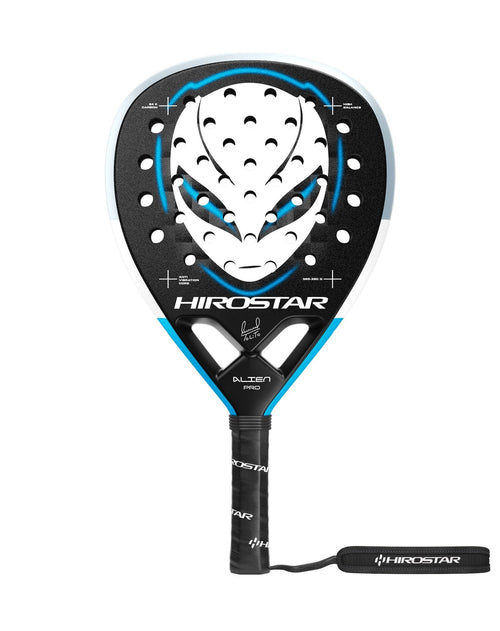
Metalbone HRD+ vs Hirostar Alien Pro. Two hard-core signature diamonds, and two of the most demanding rackets on our wall. The Alien Pro has a 24K face over Hirostar's firmest core, a higher balance (29cm against 27cm) and more weight at 365–380g; padel.how scores the 2026 Alien Pro 75/100, with a power ceiling of 9 against the HRD+'s 10 and manoeuvrability of 8 against 5. The HRD+ is the harder finisher, the Alien Pro the quicker racket in hand, and the HRD+ carries the higher RRP ($659 against $545). Neither is comfortable: padel.how gives them 6 and 5.5.
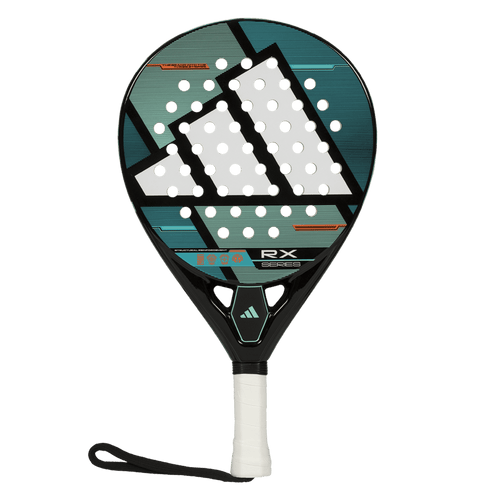
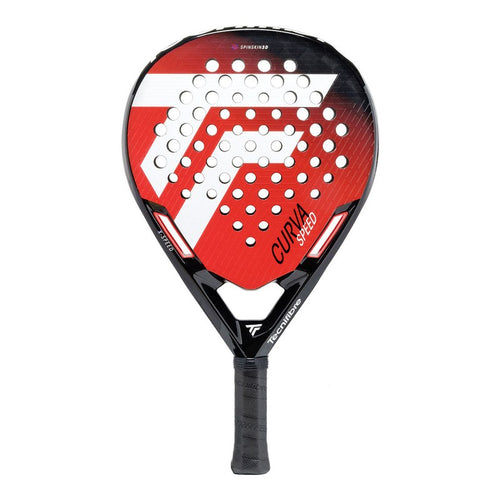
Metalbone CTRL vs adidas RX Series 2026 and Tecnifibre Curva Speed. The two rackets our adidas guide points comfort-first players at are softer and carry lower RRPs. The RX Series is a round fibreglass frame on adidas's soft EVA core, 360–375g, that Padel Racket Lab scored 7.8/10, with comfort at 7.9 and power at 7.0 — easy ball exit, comfortable in defence, limited smash power (RRP $239). The Curva Speed is a 16K teardrop on Tecnifibre's firm foam core, 355g; Padelguru, which summarises published reviews, scores the 2026 model 8.1/10 (RRP $409.99). The CTRL's case is that it is the more serious frame — stiffer, more stable, adjustable, and still the right racket when you are better than you are now. Its cost is comfort, and a higher price.

What about the Metalbone Carbon and Metalbone Team?
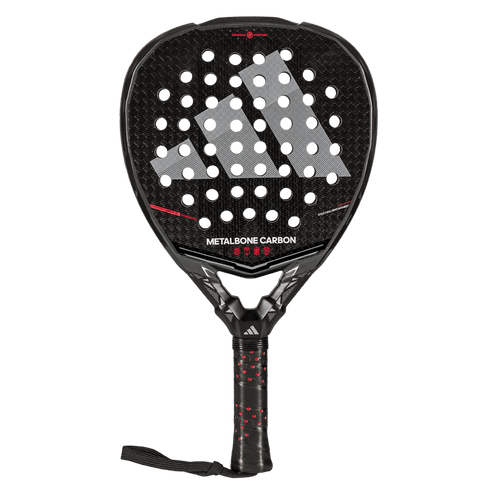
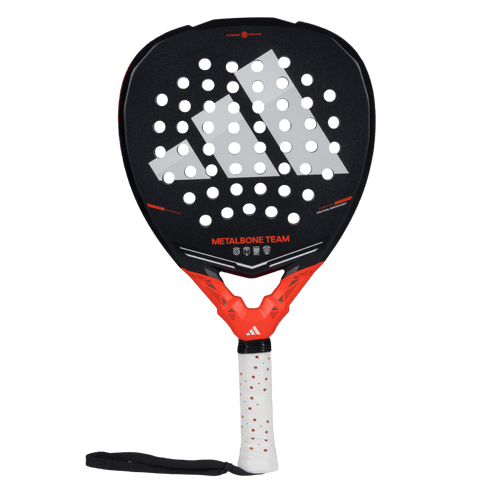
Since this guide was written we have added the two Metalbones below the flagships. They are not part of the three-way choice above because they are a different proposition: the same diamond mould, octagonal frame, Low Poly heart and long handle, but a Carbon 6K face on the Metalbone Carbon 2026 (RRP $449) and a fibreglass face on the Metalbone Team 2026 (RRP $349), both over the soft EVA core, both at a fixed 360–375g, and — per adidas's 2026 spec sheet — neither with the Weight & Balance System or the Power Groove rail. If you read this page and concluded that all three flagships are too stiff or too expensive, the Carbon is the answer for an advanced-intermediate attacker and the Team for an intermediate; if the screws are the reason you wanted a Metalbone, you still need one of the three flagships.
Frequently asked questions
Is the HRD+ harder than the Metalbone 2026?
Yes. The HRD+ uses EVA High Memory, adidas's high-density core; the Metalbone 2026 uses EVA Soft Performance, the low-density one. Everything else — mould, face, weight range, screws, RRP — is the same.
Is the Metalbone CTRL worth the money?
For the right player, yes: the same face, core and adjustable weights as the Metalbone 2026 on a round head, at the same $659 RRP, with the highest Padel.how score in the family. It is not worth it to a player who wants finishing help, a beginner, or anyone whose first criterion is comfort. Our current price is on the cards at the top of this page.
Which Metalbone does Ale Galán use?
The Metalbone HRD+ 2026. All three carry his signature, and the retail HRD+ is the same specification as the frame he plays, with the usual caveat that sponsored professionals sometimes compete with frames that differ from the retail model. Our pros' rackets guide says the same of every player on it: the pro's racket is rarely the one to copy.
Can I make the Metalbone 2026 feel like the HRD+ with the weights?
No. The Weight & Balance System changes how heavy the racket is and where the weight sits, so it can make the Metalbone 2026 swing heavier and put more mass behind the smash. It cannot change the core: the hardness, the smaller sweet spot and the dry, direct feel of the HRD+ come from the high-density rubber, and no arrangement of screws replicates that. Nor can you soften an HRD+ by leaving the weights out.
If your club has a Metalbone on its wall, hit with it there first — we have no demo rackets. Our full adidas guide covers the Drive and the accessories, and the adidas collection has live prices.
Sources
We checked every rating on this page against its review on 30 October 2026. Each score in the text links to the review it comes from.
- Padelful (one reviewer; five scores out of 10, built from the specification, professional reviews and player feedback): adidas Metalbone 2026, Metalbone HRD+ 2026, Metalbone CTRL 2026.
- padel.how (ten scores out of 10, added up to a score out of 100): adidas Metalbone 2026, Metalbone HRD+ 2026, Metalbone CTRL 2026; Hirostar Alien Pro 2026.
- Padel Racket Lab: adidas RX Series 2026.
- Padelguru (summarises published reviews): Tecnifibre Curva Speed 2026.
- Specifications: each maker's published figures, as listed on every racket's product page.
Specifications from All For Padel (allforpadel.com) and Everything Padel Australia, verified 25 September 2026. Independent scores and comments are quoted from Padel.how, Padelful, Racketdoktor (via Justpadel), Tennis Warehouse, Padel Racket Lab and Padelguru and are their opinions, not ours; we have not court-tested these frames ourselves. Prices are live from our store and are checked against Australian retailers every morning.