Walk into padel and you're immediately facing a wall of brand names, each insisting its carbon layup is the one that matters. We range seven — Babolat, NOX, Siux, Tecnifibre, Dunlop, Hirostar and adidas — and this is our honest read on what separates them.
We'll start with the conclusion, because it's the opposite of what you'd expect a shop to say: brand is the least important decision you'll make. Shape, weight, balance and core hardness matter far more. Read to the end for why — it's the section that will actually save you money.
Quick comparison
| Brand | From | Known for | Best for |
|---|---|---|---|
| Babolat | France, 1875 | Power with arm protection | Tennis converts, aggressive players, anyone with elbow history |
| NOX | Spain, late 2000s | Tour credibility at every level | Players who want a proper ladder from beginner to pro |
| Siux | Spain, 2012 | Spanish-made value and control | Club players who want performance without flagship pricing |
| Tecnifibre | France, 1979 | Comfort and trajectory control | Comfort-first intermediates |
| Dunlop | UK origin, Japanese-owned | Durability and value | Beginners, improvers and juniors |
| Hirostar | Italy (Milan), part-owned by Tolito Aguirre | Carbon-and-EVA diamonds, Aguirre's signature line | Attackers and all-court players ready for a diamond; nothing light or beginner-soft |
| adidas | Spain, made under licence by All For Padel | The Metalbone and its adjustable head weights | Attackers and control players who want to set their own balance; the Drive for first-timers |
Babolat — the tennis house
Babolat is the oldest racquet-sports company in the world, founded in Lyon in 1875 and still family-run. It made its name in strings, not frames — it invented the first tennis string, and only started making rackets in 1994. Padel came in 2001.
That heritage shows. Babolat is the one brand here that can kit you out entirely — racket, shoes, bag, apparel — and its padel range is built with tennis-player logic.
The range, decoded
Babolat uses a two-axis grid, which is actually the clearest system of any brand here once it clicks:
- The family tells you how hard it hits: Viper (most aggressive, diamond, power) → Veron (the versatile middle) → Vertuo (softest, most forgiving).
- The edition tells you how it's tuned: Technical (premium performance build), Air (lighter, faster through the air), Counter (round, control-biased, stable at the back).
So a "Counter Vertuo" is the most forgiving thing they make, and a "Technical Viper" is the most demanding.
Technology worth knowing
- X-EVA — a core of stacked EVA layers at different densities. Soft outer layers cushion ordinary shots; harder inner layers only engage when you swing hard. Comfort at low pace, pop at high pace.
- Carbon Flex — carbon blended with fibreglass for a bigger effective sweet spot and less punishment on mishits.
- Vibrabsorb — elastomer damping in both frame and handle. This is the genuine point of difference: it cuts the buzz travelling into your forearm, which matters if you've had elbow trouble.
Who plays it
Juan Lebrón has been with Babolat since around 2017 and has a full 2026 signature collection. Being straight: Babolat's padel roster is thin next to the Spanish specialists, and Lebrón is no longer world number one. Buy Babolat for what the rackets do, not for tour dominance.

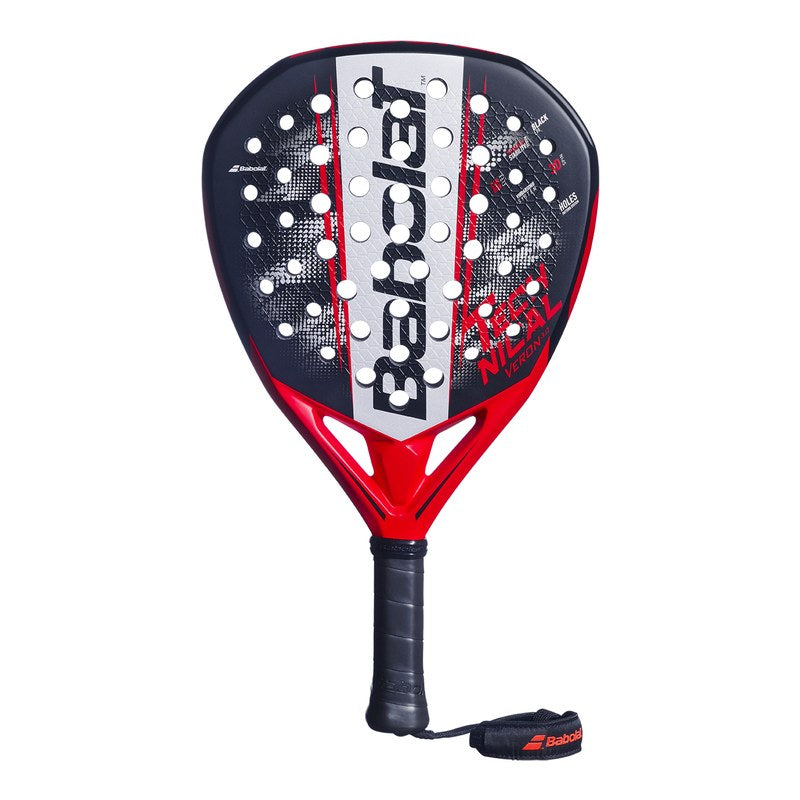
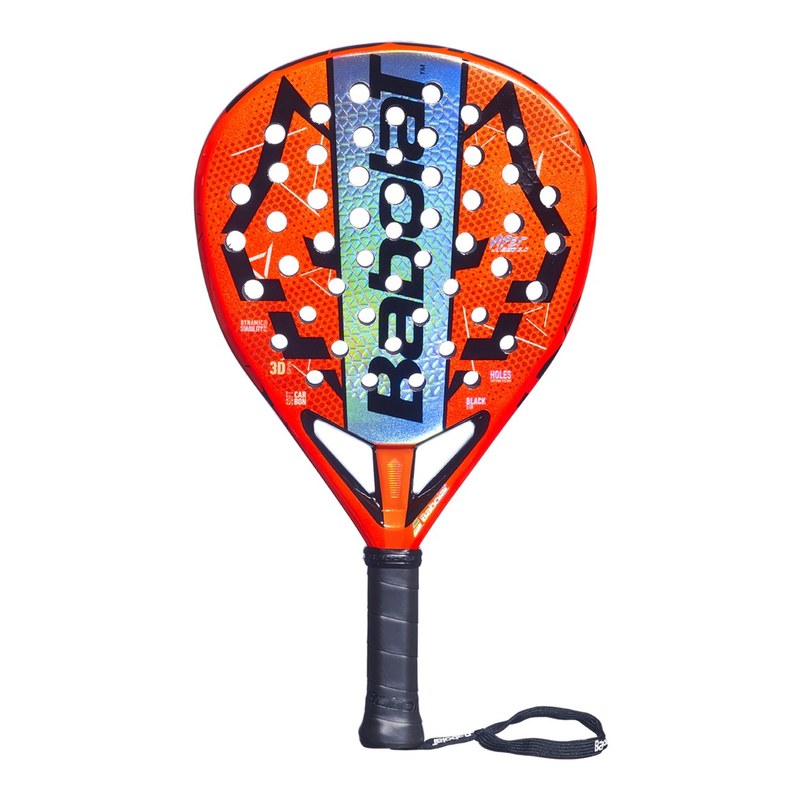
The honest trade-off: the Viper family genuinely punishes off-centre hits and wants clean technique. Head-heavy frames also tire the arm faster in Australian heat. Great brand — just don't buy above your level.
NOX — the tour brand with a real beginner range
NOX is Spanish, based in Barcelona, founded in the late 2000s by former swimmer Jesús Ballvé. (Sources disagree on whether that's 2008 or 2009, so we'll leave it there.) Unlike Babolat and Dunlop, NOX is padel-native — it didn't cross over from another sport. Signing Miguel Lamperti in 2010 is generally seen as the moment it took off.
Decoding the names
NOX's naming is the most confusing in padel, but there's a logic:
- Two letters + 10 = a player's signature line. AT10 = Agustín Tapia. ML10 = Miguel Lamperti. EA10 = Edu Alonso.
- "Genius" is the top sub-name in the AT10 line. "Attack" means the diamond-shaped, more aggressive version. "Lite" means lighter.
- Luxury / Pro Cup / Advance are price-and-level tiers, not shapes.
What's genuinely different
Weight Balance is the standout: removable 2 g and 4 g counterweights in the head, so you can shift the balance point yourself. Almost nobody else offers that, and it's genuinely useful if you're caught between two balance preferences.
Their cores run from HR3 Soft (arm-friendly) through HR3 Black (the workhorse) to HR3 Hard, plus MLD multi-layer-density cores that stay forgiving in defence but stiffen when you attack.
Who plays it
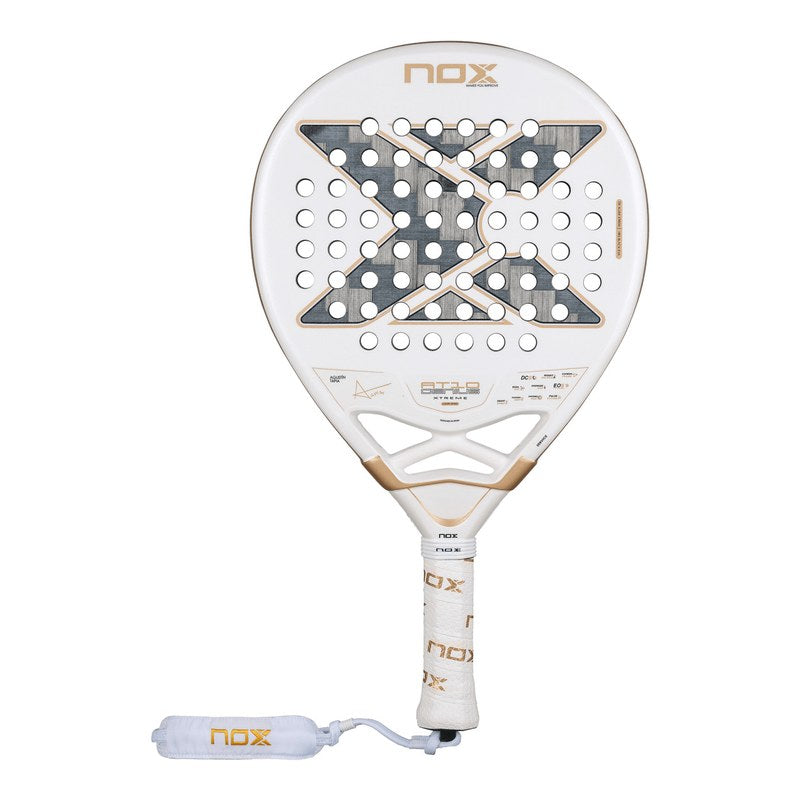
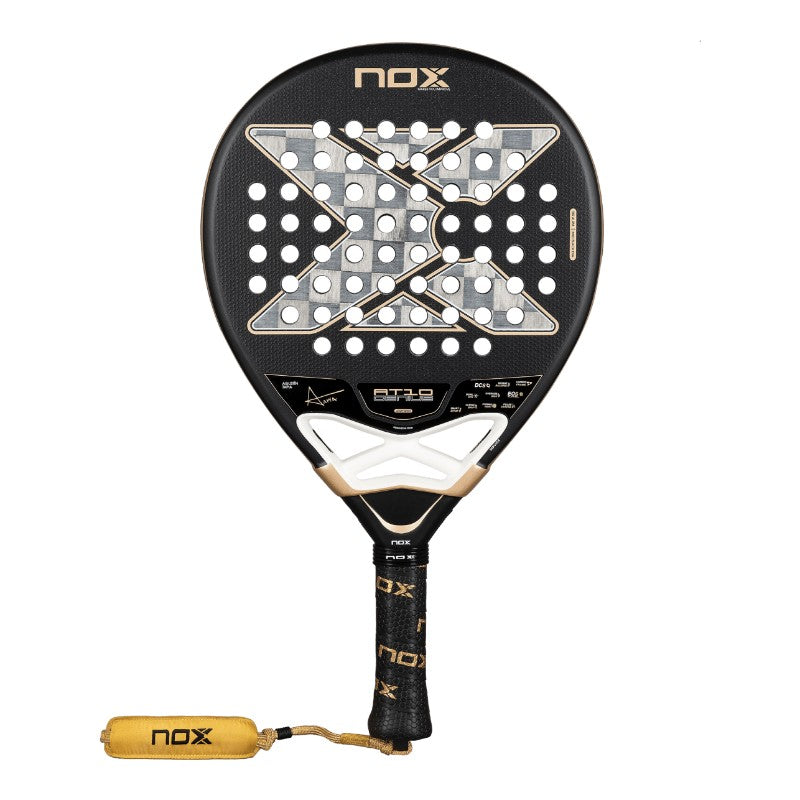
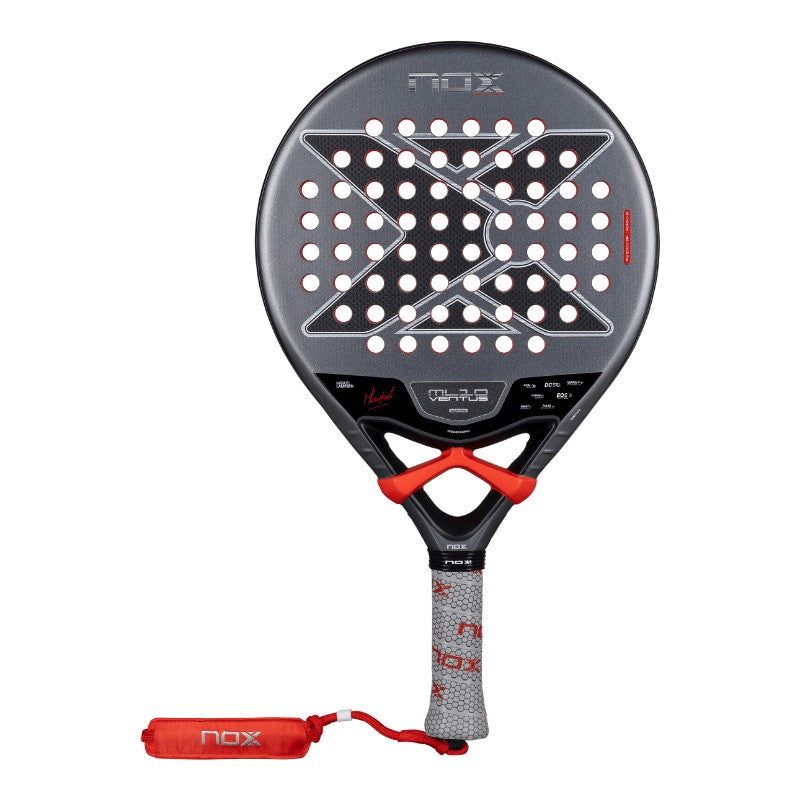
NOX has by far the deepest verified roster of the seven, including Agustín Tapia — currently world number one — on the AT10 Genius 12K Alum Xtrem, plus Miguel Lamperti (ML10) and Edu Alonso (EA10).
The 18K vs 12K lesson
Those first two rackets are the single best illustration of why carbon numbers mislead. On NOX's own 2026 AT10 line, the 18K plays softer and more forgiving, while the 12K Alum Xtrem plays drier and harder. If a higher carbon number meant stiffer, that would be backwards. It doesn't, so it isn't.
The honest trade-off: the range is genuinely overwhelming, and the halo effect is strong. Buying an AT10 Genius because Tapia plays one is the most common expensive mistake in padel — it's a demanding frame. NOX's Equation and X-series entry rackets are excellent and get ignored because they don't have a pro's initials on them.
Siux — the value pick, made in Spain
Siux is the youngest here, founded in 2012, and the only one of the seven that we can confirm owns its own factory in Spain (since 2015). Most padel brands outsource manufacturing; Siux doesn't. In a market where "made in Spain versus made in Asia" is a live debate, that's a checkable claim rather than marketing.
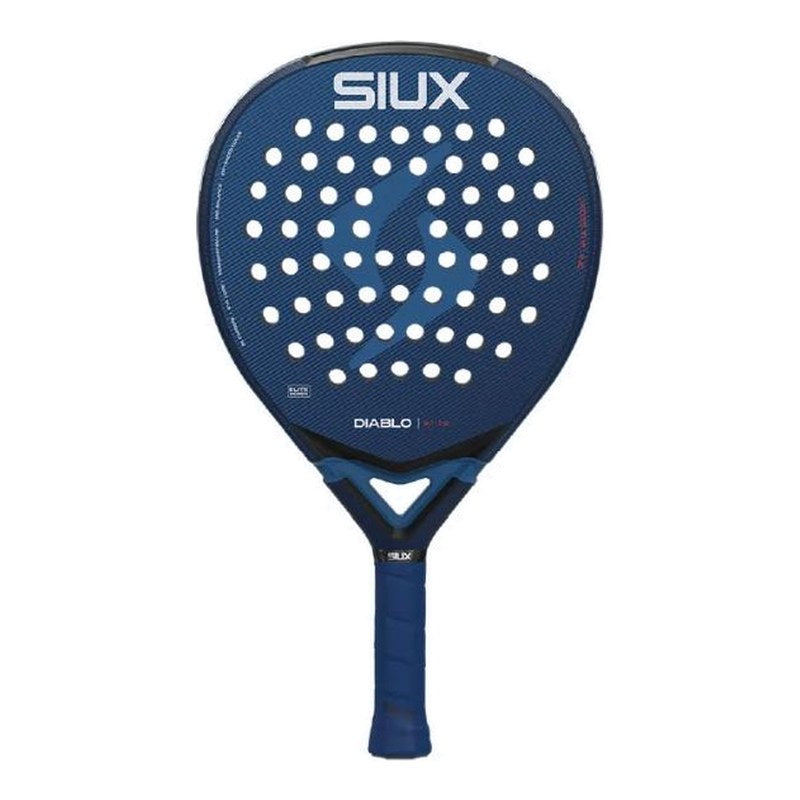
The Diablo launched in 2013 and is still a bestseller more than a decade later — unusual longevity in a category that reinvents itself annually.
The clearest range structure in padel
Siux runs a transparent four-tier ladder, which makes it the easiest brand to shop:
- Pro — advanced/competitive. Firmest, most demanding.
- Elite — same materials, slightly softer touch, slightly bigger margin for error.
- Go — intermediate.
- Beat / Play — beginner.
The Elite tier is arguably the sweet spot of our entire range — Pro-level materials, a more forgiving sweet spot, and a lower price than the flagship models.
Who plays it
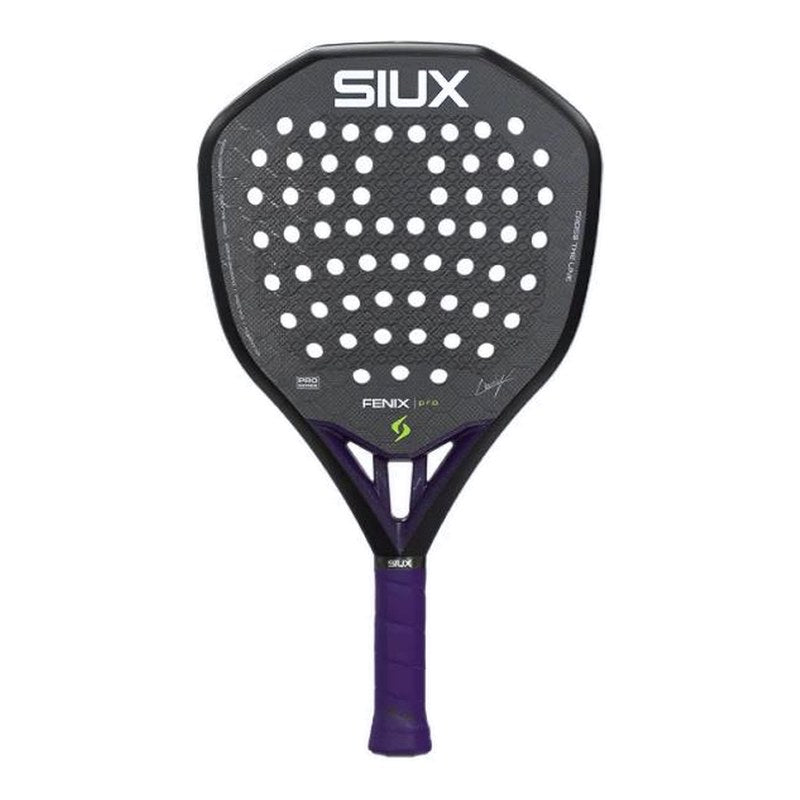
Franco Stupaczuk (Electra), Leo Augsburger (Fenix Pro) and Tino Libaak (Diablo) all play Siux. A nice detail: Lebrón and Augsburger partner each other in 2026 — a Babolat racket next to a Siux racket on the same side of the court.
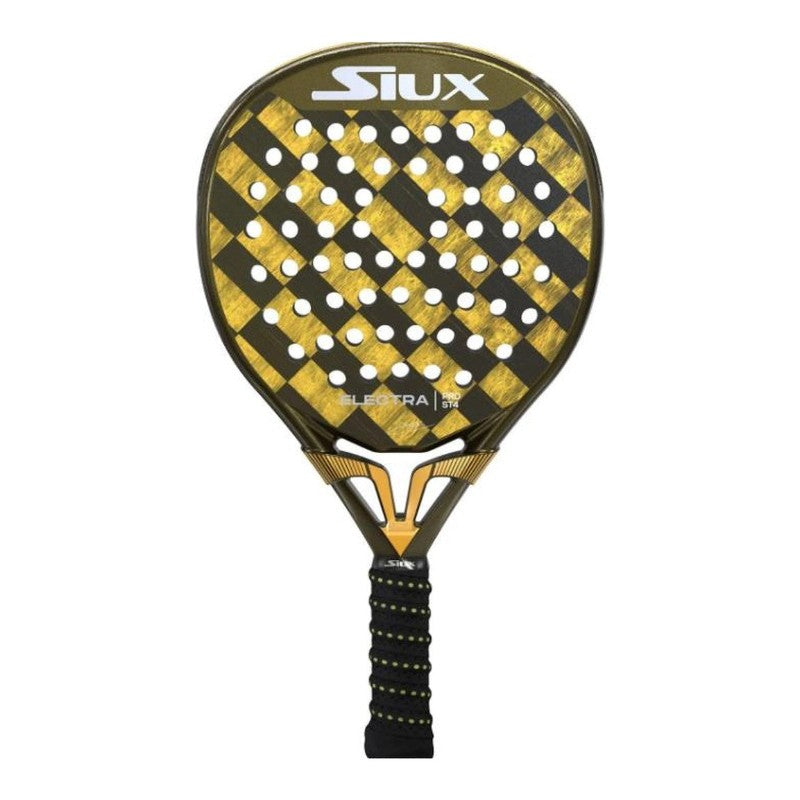
The honest trade-off: lower brand recognition in Australia than Babolat or Dunlop, so it takes a bit more trust. Spec listings also vary between retailers, so check details per model rather than assuming.
Tecnifibre — comfort and trajectory
French, founded 1979, another string company first (Lacoste took a majority stake in 2017). Its padel range is engineering-led and pitched at manoeuvrability and feel rather than raw power.
Two lines worth knowing:
- Bomba — the power family. Lite → Soft → Speed → Max, in ascending order of punch.
- Curva — the more interesting one technically, built around a "negative angle" concept intended to produce lower bounces off the back glass, giving your opponent less to work with. Club → Soft → Speed → Power.
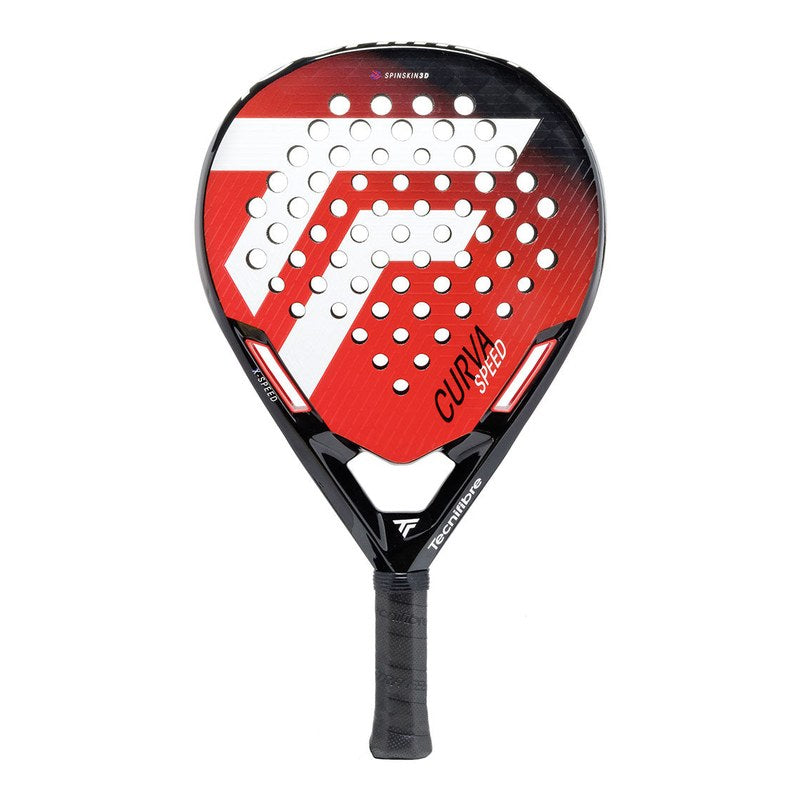
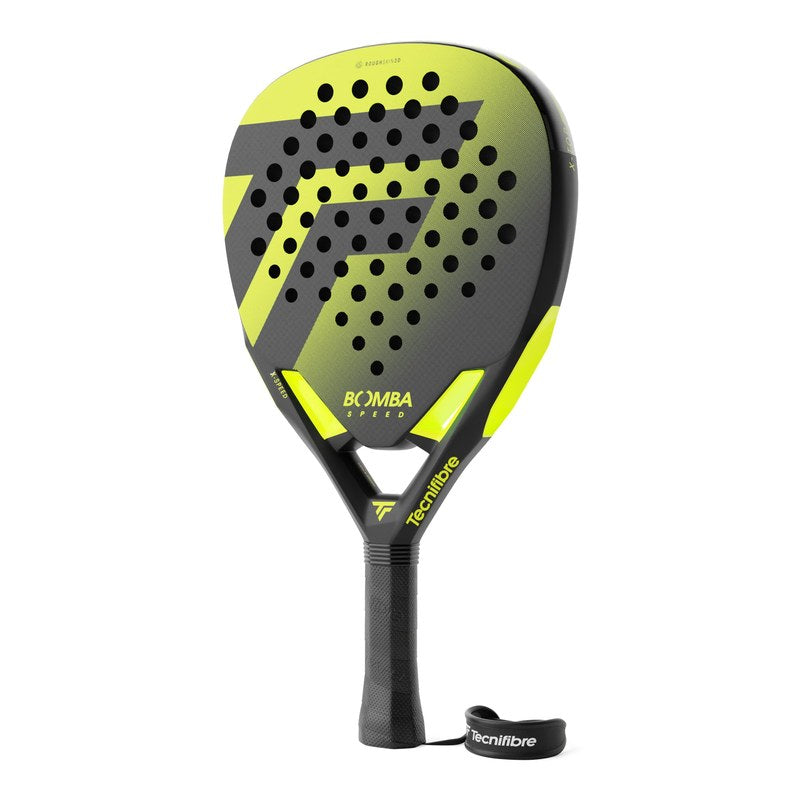
Honest note: Tecnifibre's own claims about the Curva's angle advantage are brand-generated figures, not independent testing. And we couldn't verify a notable padel professional using Tecnifibre in 2026 — its star players are tennis. That doesn't make the rackets worse; it just means you're buying engineering rather than tour validation.
Dunlop — the dependable workhorse
British in origin (Dunlop Sport dates to 1910), Japanese-owned today via Sumitomo. In padel it's the value and durability play rather than the innovation leader — honest rackets, sensibly priced, built to last.
The FX series runs cleanly from Start (beginner) through Team (intermediate) to Pro (advanced), which makes it one of the easiest ranges to buy along as you improve. Dunlop also has the most genuine junior coverage of the seven.
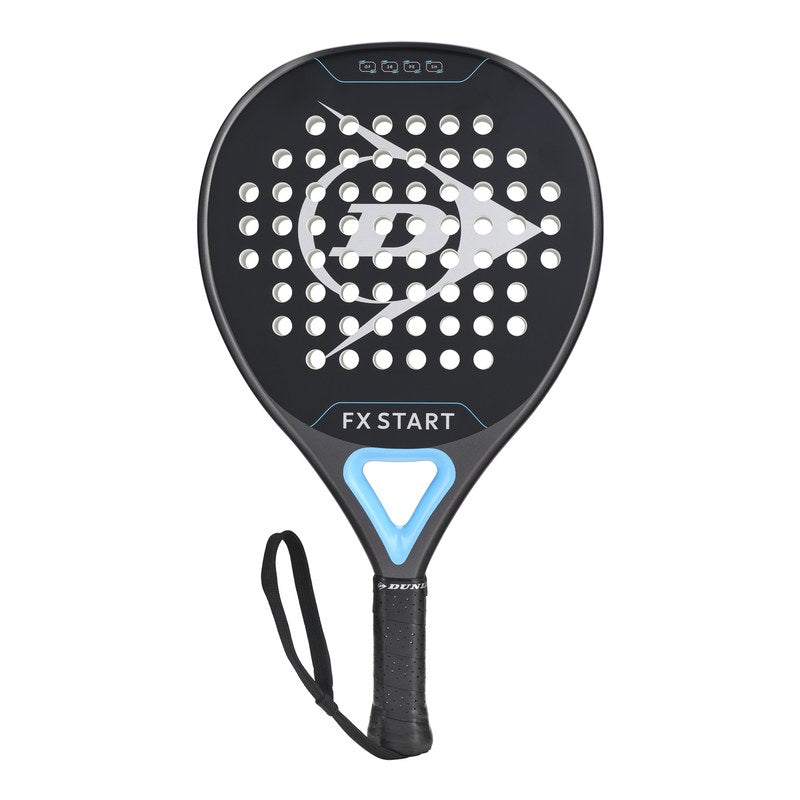
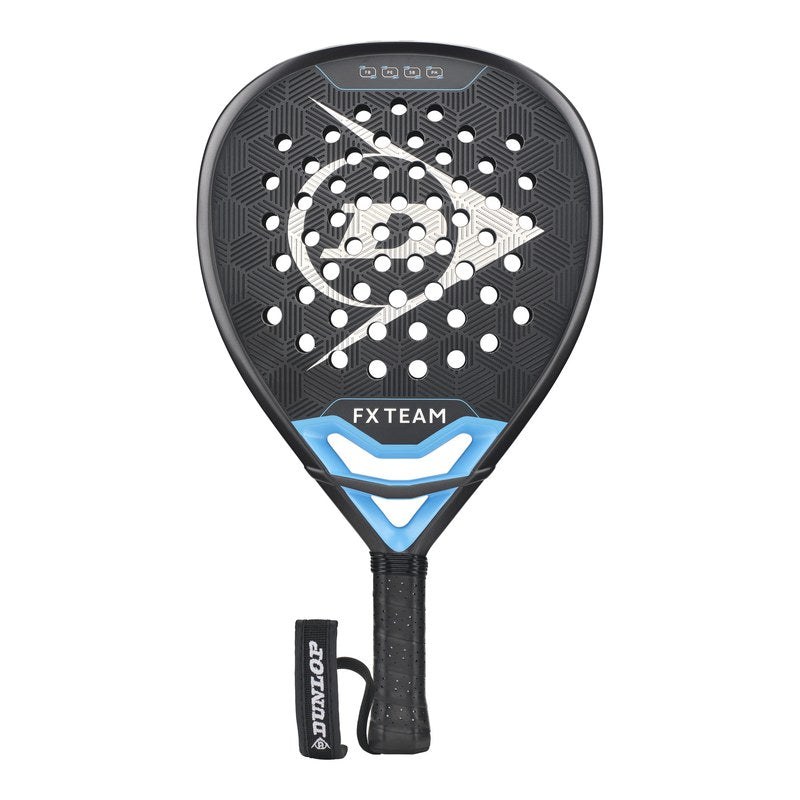
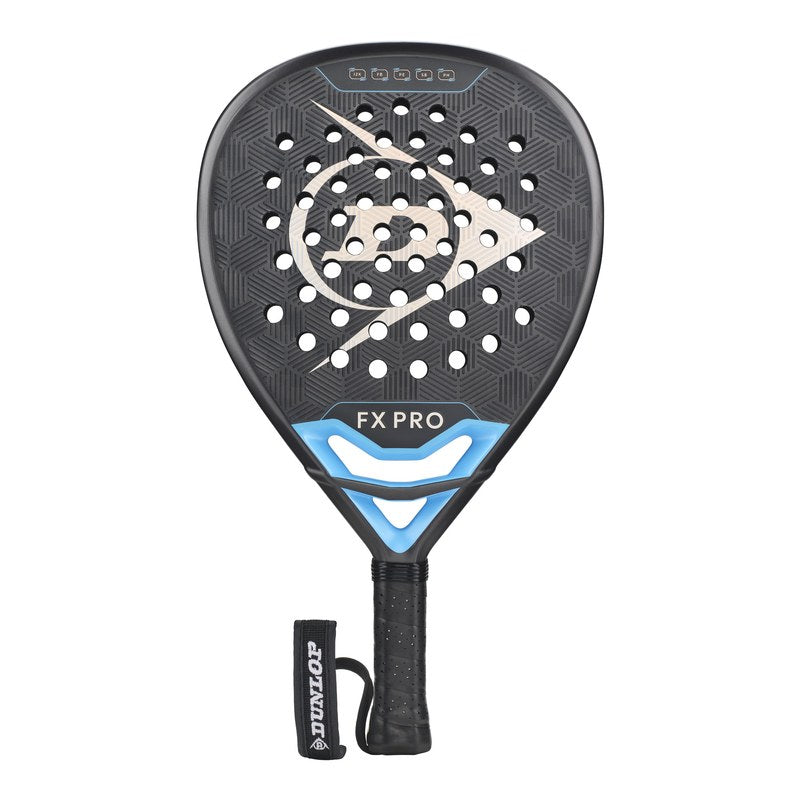
Honest note: as with Tecnifibre, we couldn't verify a notable padel professional on Dunlop in 2026. If tour pedigree matters to you, look at NOX or Siux. If value and durability matter more, Dunlop is excellent.
Hirostar — the Italian newcomer, part-owned by a pro
Hirostar S.r.l. is based in Milan, owned by Lucio Mormile, and sells in around nineteen countries. It was added 23 September 2026 (a day before adidas) and is the only Italian brand we range. The detail that makes it unusual: Tolito Aguirre has been an ambassador since 2021 and a shareholder since July 2024. He part-owns the company. Most player signatures are endorsement deals; this one is his racket in the literal sense.
The range, decoded
Six frames, all diamonds bar one, and the names map to the cores rather than to tiers:
- Alien Pro and Alien Core — Aguirre's signature mould. The Pro is 24K carbon on the hardest core in the range; the Core is the softer 12K version of the same shape.
- Blackstone and Redstone — a pair of 18K diamonds that differ only in balance. The Redstone's medium-low balance is rare on a diamond.
- Horizon — the 12K attacking diamond for a player moving up to a first diamond.
- Solar — the one round head, on the softest core, for control players and sore arms.
Technology worth knowing
- One construction throughout — every frame is 38mm with a 100% carbon tubular frame and a matte sandblasted face. No foam, no fibreglass: carbon faces (12K, 18K or 24K) and EVA cores across the whole range.
- EVA Black family — the cores run from Soft (Solar) through Mid (Horizon), standard (Alien Core) and 17 (Blackstone, Redstone) to X-Treme (Alien Pro). Pick the core, and you have largely picked the racket.
- Smart Holes System — Hirostar's drilling pattern, which it claims enlarges the hitting area. That is a manufacturer's claim, not a tested one.
- Aerodynamic anti-vibration bridge — the throat piece on the Alien frames; the Pro line uses a simpler integrated bridge.
Who plays it
Tolito Aguirre, on the Alien Pro. No other tour player we can verify. Independent test data is thin, and we would rather say so: one scored review of the Alien Pro (Padel.how, 73/100, control 9, comfort 6.5) and a Padelspeed spotlight on the Redstone. Everything else on this page about Hirostar comes from the specification sheet.


The honest trade-off: this is a range for attackers who want a stiff, precise diamond (Alien Pro, Blackstone), all-court players who want a diamond they can defend with (Alien Core, and the unusually low-balanced Redstone), improvers moving to a first diamond (Horizon), and control players or sore arms (Solar). It is not for anyone who needs a light racket — nothing in the range is under 360g — or a beginner who wants the most forgiving frame available. More detail in our full Hirostar guide.
adidas — the three stripes, built by a Spanish padel specialist
adidas does not make padel rackets itself. All For Padel, a Spanish company, holds the adidas padel licence and designs and builds the rackets, bags, balls and accessories. In Australia, Everything Padel in Sydney is the official adidas padel licensee for Australia and New Zealand, and that is who we buy from. We added adidas on 24 September 2026, a day after Hirostar.
The model years need a word, because the naming changed. The Metalbone went 3.3 (2024), then 3.4 (2025), and the current rackets are simply called 2026 — the specification is unchanged from the 3.4.
The range, decoded
Four rackets, and the names tell you most of what you need:
- Metalbone 2026 — Ale Galán's diamond: head-heavy, a Carbon Aluminized 16K face on the low-density EVA Soft Performance core, 345–360g before any screws go in.
- Metalbone HRD+ 2026 — the same mould on the high-density EVA High Memory core. Harder, more precise, and the frame Galán actually competes with.
- Metalbone CTRL 2026 — the round, even-balanced version, with the same 16K face, Soft Performance core and adjustable weights.
- Drive 2026 — the beginner frame: round, even balance, fibreglass face, EVA Soft Performance core, 360–375g. Black or blue.
Technology worth knowing
- Weight & Balance System — up to 11.2g of screws in the head, so you set your own balance. NOX's Weight Balance is the only other adjustable system on this page.
- Octagonal Structure and Low Poly frame — the faceted frame, with the Power Groove rail running in its profile.
- Carbon Aluminized 16K face — finished with the textured Spin Blade decal and drilled in the Smart Holes Curve pattern.
- Two EVA cores — Soft Performance (low density) in the Metalbone and CTRL; High Memory (high density) in the HRD+.
- Extra Power Grip — a longer handle than standard.
The Drive is a simpler build: a fibreglass and EVA round frame with Smart Holes Lineal drilling and no adjustable weights.
Who plays it
Ale Galán, on the Metalbone HRD+ 2026. No other tour player we can verify, so we are not listing any. Independent test data is better than for most new arrivals: Padel.how scored the Metalbone, HRD+ and CTRL 64, 70 and 71 out of 100, and Padelful rated them 8.7, 8.7 and 8.5.


The honest trade-off: this is a range for advanced attackers who want the stiffest, most precise diamond (HRD+), club attackers who want a tuneable diamond with a larger sweet spot (Metalbone 2026), control players who want a premium round frame with adjustable balance (CTRL — currently the value pick at $499 against a $659 RRP), and first-timers who want the brand (Drive). It is not for anyone chasing comfort first — every tester scores the Metalbones below average on comfort — or anyone who needs a racket under 340g. On price: adidas is a distributor-supplied brand, so, as with Hirostar and Tecnifibre, we match the distributor's price rather than undercut it. More detail in our full adidas guide.
The part that will save you money: brand barely matters
This is the section we'd rather you remembered.
The carbon numbers are largely marketing
Tennis Warehouse University's engineering analysis of padel construction is blunt about this. The "K" number just describes how many filaments are bundled into one tow of carbon fibre — it's a manufacturing decision, not a performance metric. Stiffness comes from the fibre's modulus, which is completely independent of K-count. Higher-K fabric is actually cheaper per square metre, not better.
More importantly: once the face is drilled with sixty-odd holes, it stops being the main structural element. The thick foam core dominates how the racket flexes and rebounds — the face becomes a surface-tension modulator. Which is exactly why NOX's 18K plays softer than its 12K.
How much does the racket matter at all?
A fair estimate puts racket choice at roughly 15–20% of on-court performance. Coaching, court time and fitness are the rest. A $450 racket in untrained hands plays worse than a $150 racket belonging to someone who's had five lessons.
Where rackets genuinely matter: injury prevention (weight, balance and core hardness materially affect elbow risk), consistency (sweet spot size and forgiveness), and enjoyment.
The order that actually matters
- Weight and balance — biggest influence on injury risk and manoeuvrability
- Shape — round, teardrop or diamond
- Core hardness — soft for comfort and forgiveness, hard for power and crispness
- Face material — fibreglass forgives, carbon gives precision and feedback
- Surface texture — real but marginal
- Brand — mostly a shortcut for all of the above
The fair concession: brands do have coherent design philosophies, so once you know what you want, brand becomes a useful navigation aid. Babolat for power with arm protection. NOX for the deepest ladder and adjustability. Siux for value and control. Tecnifibre for comfort and trajectory. Dunlop for durability and juniors. Hirostar for Italian-built carbon diamonds and Aguirre's signature line. adidas for a diamond or round frame you can tune with screw-in head weights.
That's brand as a shortcut — not brand as a performance guarantee.
Why we range seven brands and not twenty
Where brand legitimately matters for an Australian buyer is the unglamorous stuff: warranty, stock depth, and replacement parts — grips, protectors and safety cords. Ranging seven brands deeply beats ranging twenty thinly when you need a frame protector for a two-year-old racket.
We don't stock Head or Wilson. If you've got your heart set on either, our honest advice is to find a club that has one to try — several Gold Coast venues do — rather than buying blind from us or anyone else.
Where to go next
Work out the fit first, then pick a brand: How to Choose a Padel Racket, Round vs Teardrop vs Diamond, Weight and Balance and Carbon vs Fibreglass.
Or browse by brand: Babolat, NOX, Siux, Tecnifibre, Dunlop, Hirostar, adidas.
Brand histories, technologies and professional sponsorships are current as at September 2026. Sponsorships change mid-season — where we couldn't verify a claim for 2026, we've said so rather than repeating it.