
Babolat is the biggest brand on our wall — thirteen 2026 rackets, from the Counter Origin (RRP $199) to the Viper Juan Lebrón (RRP $599), plus the Court ball, three overgrips, two wristbands and four bags. The names confuse everyone: Viper, Veron, Vertuo, Origin, then Technical, Counter and Air in front of them, then Juan Lebrón's signature on some and not others. This guide decodes the system, gives the verified specification of every Babolat we stock, quotes what the independent rating sites found, and says plainly which one suits which player — with live prices on the product cards below.
The short version
| Who makes it | Babolat, the French racket-sport company founded in Lyon in 1875 — the oldest racket-sport brand in the world, and the one that made the first tennis strings. Padel has been a core line for them since the 2010s, with Juan Lebrón as the face of the range. |
|---|---|
| How the names work | Three families by feel: Viper (power, diamond), Veron (versatile, the middle of the range) and Vertuo (comfort and control). Origin is the entry-level family below them. A prefix then sets the build: Technical = the full-spec version, Counter = the round control version, Air = the light, quick version. Juan Lebrón models are his signature editions of the Viper and Veron. |
| The rackets we stock | Viper: Technical Viper 3.0, Technical Viper Soft 3.0, Viper Juan Lebrón 3.0, Viper Soft Juan Lebrón 3.0, Counter Viper 2.6, Air Viper 2.6. Veron: Technical Veron 3.0, Veron Juan Lebrón 3.0. Vertuo: Air Vertuo 2.6, Counter Vertuo 2.6. Origin: Counter Origin, Air Origin, Technical Origin+. |
| RRP in Australia | From $199 (Counter Origin) to $599 (Viper Juan Lebrón 3.0), with the Air Origin at $249, the Vertuos and Origin+ at $265, the Verons at $335–$365, the Soft Vipers at $425–$455, the Air and Counter Vipers at $489 and the Technical Viper at $559. Our own prices are on each product page and are checked against Australian retailers every morning (how we price). |
| Best for | Advanced attackers (Technical Viper 3.0, Viper Juan Lebrón 3.0), attackers who want the diamond with less punishment (Technical Viper Soft, Viper Soft Juan Lebrón, Technical Origin+), fast net players (Air Viper, Air Vertuo), control players and defenders (Counter Viper, Counter Vertuo), improving intermediates who want an attacking shape they can live with (Technical Veron, Veron Juan Lebrón), and first-year players (Counter Origin, Air Origin, Counter Vertuo). |
| Not for | A beginner looking at anything with Viper on it, a player with a sore elbow looking at the Technical Viper or the Viper Juan Lebrón (hard cores), or anyone who wants a racket to manufacture power for them — the Vertuos and Counter Origin are honest about not doing that. |
How the Babolat range is organised
Once you see the grid, the names stop being confusing. Read the family name for the feel and the prefix for the build:
| Technical (full spec) | Counter (round, control) | Air (light, quick) | Juan Lebrón (signature) | |
|---|---|---|---|---|
| Viper — power | Technical Viper 3.0 · Technical Viper Soft 3.0 | Counter Viper 2.6 | Air Viper 2.6 | Viper Juan Lebrón 3.0 · Viper Soft Juan Lebrón 3.0 |
| Veron — versatile | Technical Veron 3.0 | — | — | Veron Juan Lebrón 3.0 |
| Vertuo — comfort | — | Counter Vertuo 2.6 | Air Vertuo 2.6 | — |
| Origin — entry | Technical Origin+ | Counter Origin | Air Origin | — |
Two more things decode the rest. The number is Babolat's generation: 3.0 is the 2026 generation of the Viper and Veron lines, 2.6 the current generation of the Counter, Air and Vertuo frames. And Soft means the same mould on a softer core and face — the Technical Viper Soft is the Technical Viper with the hardness taken out, and the Viper Soft Juan Lebrón is the same idea in his colours. Babolat's Australian dealers list more variants than we stock (the women's Stima and the Air Veron among them); we range the thirteen frames Australian players actually ask us for.
Every Babolat racket we stock, with the verified specs
Specifications below are Babolat's published figures, checked on 17–24 September 2026 and repeated on each product page with a spec-checked date. Babolat quote a weight range rather than a single figure, and every brand's real-world weights vary by around ten grams either way. The independent scores are quoted from the sites named and are their opinion; we have not court-tested these frames ourselves.
The Viper family — power
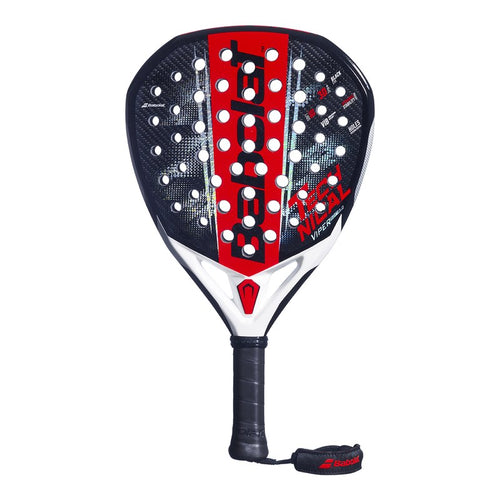
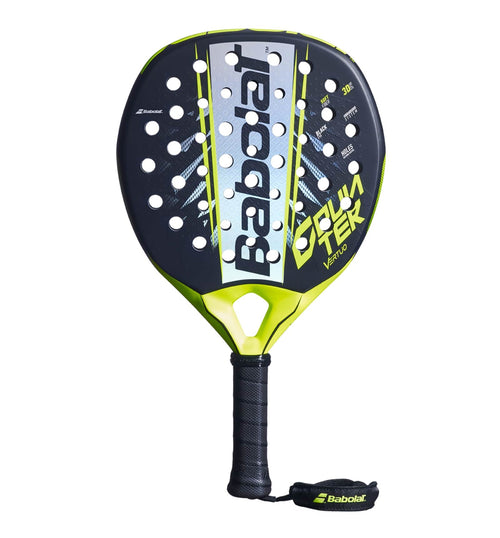
Technical Viper 3.0 (RRP $559) is the top of the power line: diamond, high balance, 360–380g, a hard EVA core with a carbon sheet laid inside it (Babolat's Carbon Power Layer), a 3K carbon face with the raised 3D Spin+ finish, and the Dynamic Stability System bar through the heart. It is the frame Juan Lebrón's competition racket is built from and it behaves like it: the most direct response in the range, the smallest margin for error, and a racket for a player whose overhead is already repeatable. Not arm-friendly, and we say so on the page.
Viper Juan Lebrón 3.0 (RRP $599) is Lebrón's signature diamond — hard EVA, 3K carbon, rough face, 360–380g, high balance and the same Dynamic Stability System. Babolat list the Carbon Power Layer on the Technical Viper only, so that is the one with extra carbon inside the core; both are the pro end of the range.
Technical Viper Soft 3.0 (RRP $425) keeps the diamond and the power geometry and swaps in a soft black EVA core and a softer 3K carbon face. Longer dwell, more feel on slow balls, noticeably less shock through the arm, a little less top-end power that most players will never miss. It is the Viper for a club attacker, and the one we point most diamond players at. Rated intermediate and arm-friendly.
Viper Soft Juan Lebrón 3.0 (RRP $455) is the signature version of that idea, and we would rather say what the name does not: "soft" is relative to the standard Viper, not to the market. Padelful rates it 8.6 and padel.how 73/100, with comfort at 7/10 against the standard Viper's 6.5 — calmer, but still much firmer than a comfort-oriented frame. If your elbow is the reason you are shopping, look at the Vertuos or the Tecnifibre Bomba Soft instead.

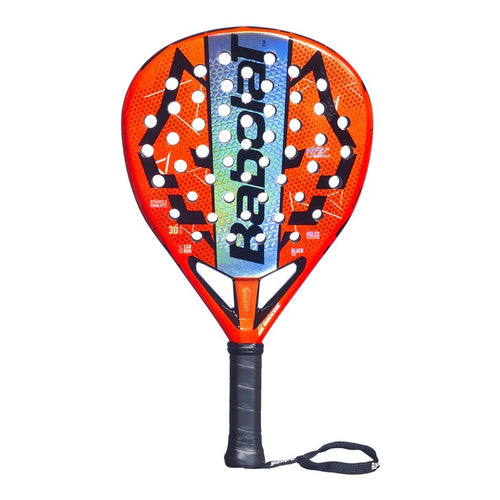
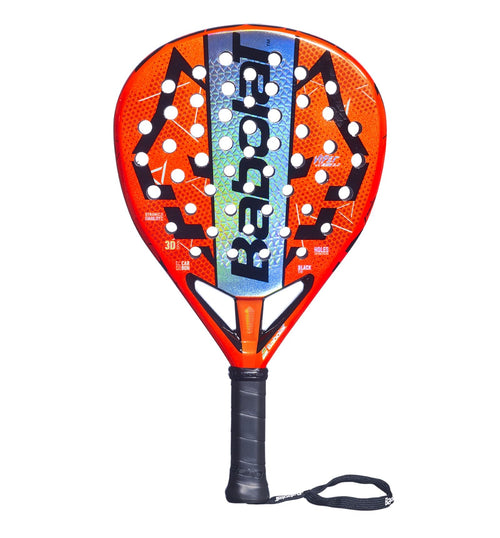
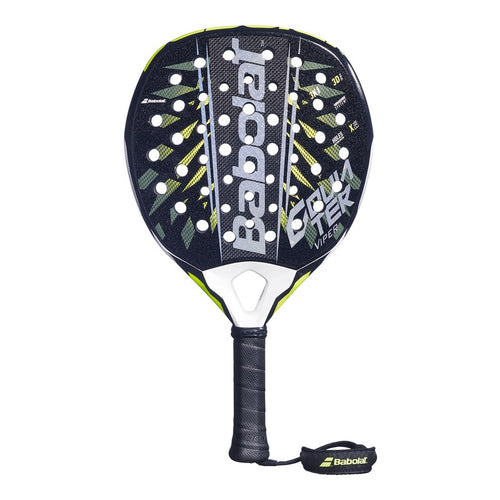
Counter Viper 2.6 (RRP $489) is the control racket of the Viper family — Coki Nieto's frame. A round head that centres the sweet spot and widens the margin, on a 3K carbon build with the 3D Spin+ face and the three-layer X-EVA core (firmer at the edges, softer through the middle). 355–375g, balance towards the head for a round. It is the Babolat for an advanced defensive player who still wants bite on the ball.
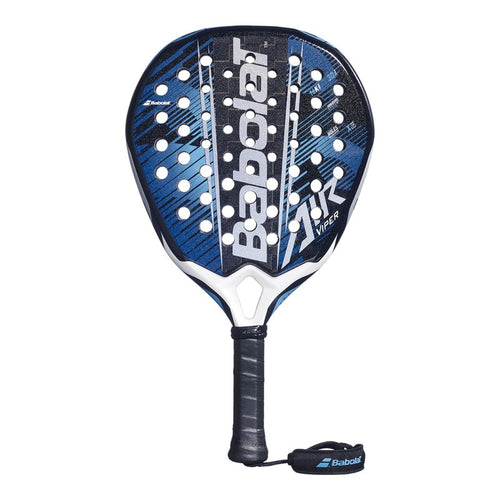
Air Viper 2.6 (RRP $489) is the quick one: teardrop, 345–365g, medium balance, 16K carbon face over the X-EVA core. Babolat pitch it at the "Air Striker" — a dynamic net player who wants reactivity rather than mass. padel.how scores it 79/100, third of the 14 advanced attacking teardrops it ranks for 2026, with manoeuvrability 9 and sweet spot 7; Padelful put power at 9.1 and manoeuvrability 9.0 against a 7.4 sweet spot, with the honest line that when you miss the centre the quality drops fast. Zona de Padel's side-by-side found it more comfortable and better at the volley than the Technical Viper, and a step down in outright smash power. Advanced net players; not a forgiving racket.
The Veron family — the middle of the range
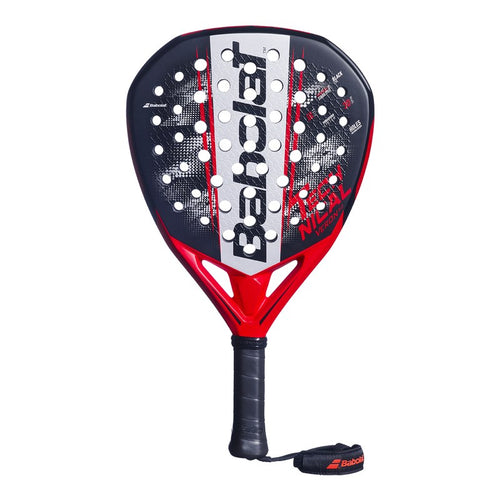
Technical Veron 3.0 (RRP $335) is the attacking shape pitched at an intermediate rather than a tour player: diamond, high balance, 350–370g, a black EVA core in the middle of Babolat's hardness range, and — the detail that matters — a Carbon Flex face, a woven carbon-and-fibreglass blend that is more forgiving than pure carbon. A little less explosive than the Technical Viper, a lot easier to get clean depth from when contact is not perfect. Arm-friendly. A sensible step up if you want the attacking shape without the narrow margin of a full pro diamond.
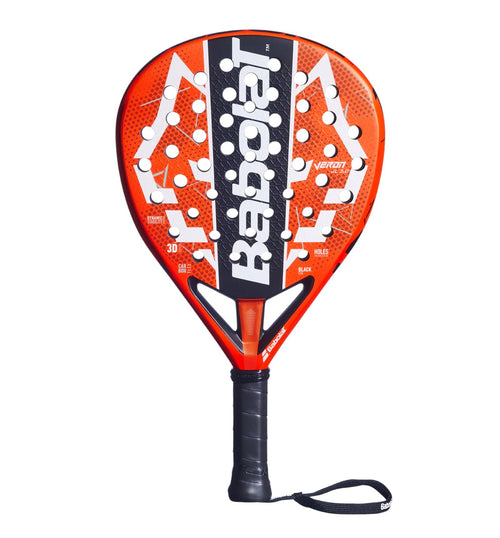
Veron Juan Lebrón 3.0 (RRP $365) is Lebrón's accessible signature: the same Carbon Flex face and black EVA core in a diamond mould, 350–370g. Babolat aim it at intermediate and competitive players with an attacking style, and the rating sites agree it attacks: Padelful rates it 8.4 with power at 9, and padel.how scores it 73/100, finding easy attacking depth at medium swing speed and an easier racket than the Vipers, with less precision at full pace. We list it as a power racket. If you want more punch in Lebrón's colours, the Viper Soft Juan Lebrón is the firmer step up.
The Vertuo family — comfort and control
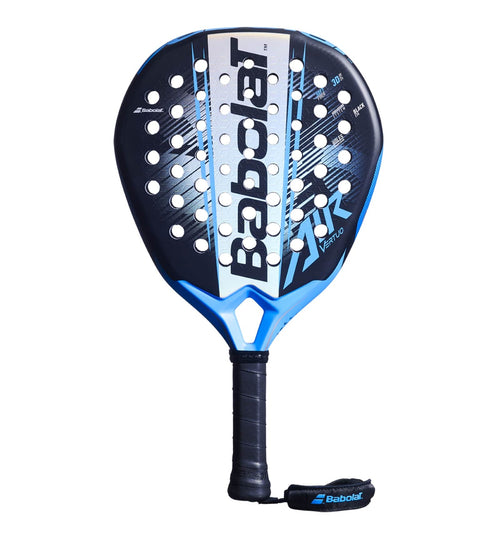
Air Vertuo 2.6 (RRP $265) is a 335–355g teardrop that actually feels like its weight — soft black EVA core, fibreglass face, a neutral balance around 265mm. Padelful rates it 8/10 (May 2026), led by manoeuvrability 9.1 and rebound 9, and praises easy ball exit, fast reactions at the net and a natural bandeja; padel.how scores it 68/100, with comfort and power on demand at 8 against a power ceiling of 5, and sees a practical first serious racket that gets depth from short swings. If you finish points with your smash, it is the wrong racket. If you would rather get to the ball than blast it, it is one of the best-value frames we sell.
Counter Vertuo 2.6 (RRP $265) is the most forgiving racket Babolat make in this range: round, even balance, 340–360g, soft core, fibreglass face. Padelful rates it 8.3/10 (April 2026), with sweet spot 9.1 and rebound 9.2 against power 6.6, and praises a huge, forgiving sweet spot and an arm-friendly feel; padel.how gives it 8.5 for comfort and a power ceiling of 5. Either way, you supply the pace. For players who win points by not losing them, and the Babolat we recommend most often to anyone with a history of elbow trouble. It is the round racket that will still feel right in year two. It sells out between deliveries; the card below shows live stock.
The Origin family — the first rackets
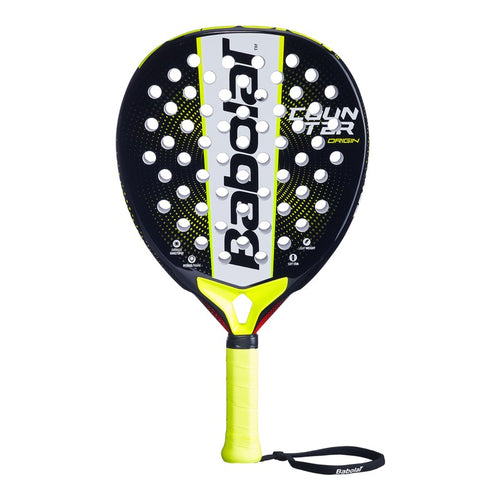
Counter Origin 2026 (RRP $199) is the racket Babolat say you need to step onto a court for the first time, and for once the marketing line is the accurate description: round, head-light balance, fibreglass face, soft EVA core, 345–365g. Padel Racket Lab scored it 7.8/10 on a beginner scale — sweet spot 8.6, comfort 8.2, forgiveness 8.2, control 8.0, power 6.4 — and note it is very forgiving off-centre, low on overhead power, and a racket a fast-improving player will outgrow. That is what a first racket is for. It is the one we hand to most first-timers who know they will keep playing.
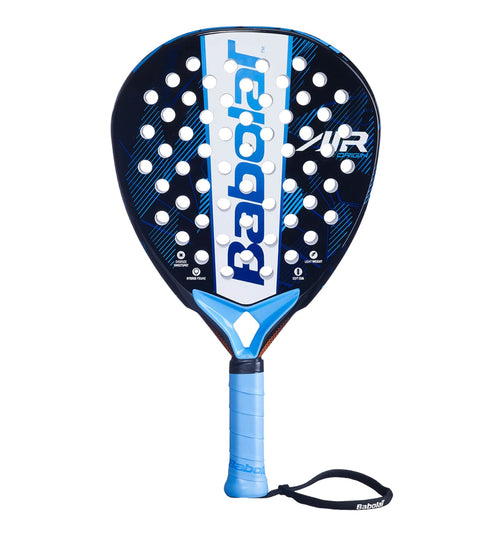
Air Origin 2026 (RRP $249) is the lighter, quicker sibling: a 335–355g teardrop on a hybrid carbon/fibreglass frame, fibreglass face, soft EVA core, with the balance kept near the hand. Volleys come around faster and off-centre hits twist the frame less, and power has to come from your swing rather than the racket. Babolat pitch it at net players taking their first steps, which is accurate. Arm-friendly. It had sold through at the time of writing; the card below shows live stock.
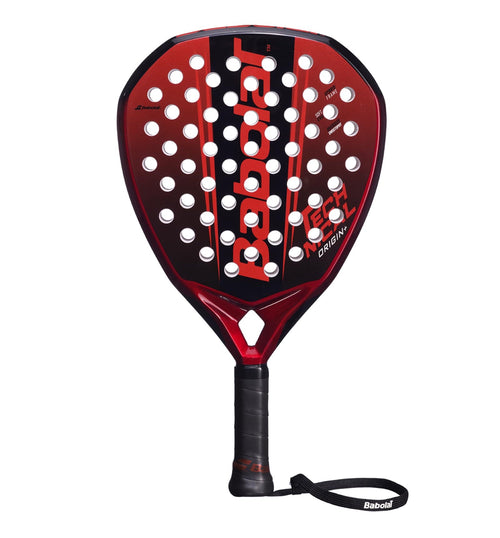
Technical Origin+ 2026 (RRP $265) is the unusual one: a diamond head in soft materials — fibreglass face, hybrid carbon/fibreglass frame, soft EVA core, 345–365g, high balance. Attacking geometry without the punishment that usually comes with it, because power comes from the face flexing rather than from stiffness, and the sweet spot is enlarged. Arm-friendly. It is one of the gentlest ways into a diamond on our wall and the right first diamond for an intermediate who has been playing a round and wants to start finishing points.
What Babolat's technology names actually mean
Vibrabsorb System² puts SMAC elastomer inserts through the carbon, the core and the handle to absorb vibration without softening the response — it is on every 2026 frame from the Counter Origin up. X-EVA is a three-layer core sandwich, firmer at the edges and softer through the middle, which is how the Counter Viper and Air Viper keep feel on soft hands without going dead on a hard ball. Carbon Power Layer is a carbon sheet laid inside the hard EVA core of the Technical Viper for the fastest energy return in the range. Carbon Flex is the woven carbon-and-fibreglass face on the Verons — the reason they are more forgiving than the Vipers. 3D Spin+ is the raised surface finish on the carbon-faced frames for bite on the ball; the fibreglass frames use a sandblasted rough finish. Dynamic Stability System is a bar through the heart that stops the head twisting on off-centre hits. Holes Pattern System is the redistributed drilling on the Counter Viper that keeps the face stable. What 3K, 12K and 16K actually mean →
The ball, the grips, the wristbands and the bags
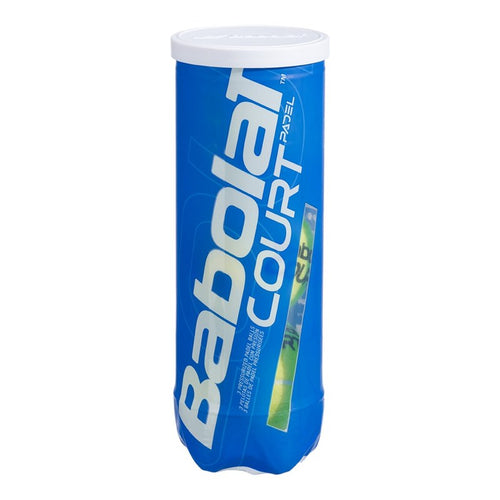
Court balls. FIP and FFT homologated, the former official ball of the APT Padel Tour, and the ball people underrate because it is the cheapest-looking can on the shelf. A lively, consistent bounce in the middle of the speed range and a felt that holds its properties noticeably longer than average under heavy use — which is why clubs buy it. Our ball comparison →
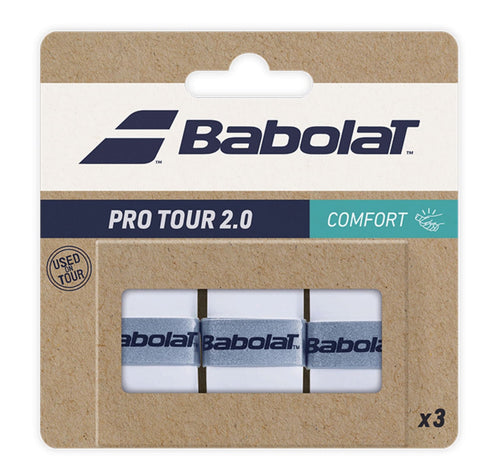
Overgrips. Three of them, and they are different products. Pro Tour 2.0 is tacky, cushioned and absorbent — the one for sweaty hands and a Queensland summer. VS Original is thin and dry, for players who want to feel the bevels of the handle. MY Overgrip is the entry-level tacky grip, the economical choice if you re-wrap often. All are three-packs; replace every four to eight sessions. How to fit one →
Wristbands. The standard Logo Wristband and the wider Terry Jumbo, both two-packs in a synthetic terry that dries between sessions. A wristband is grip maintenance, not fashion: it is what stops forearm sweat turning a good overgrip slick in one set.
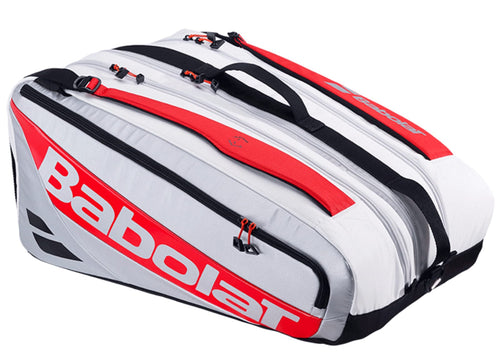
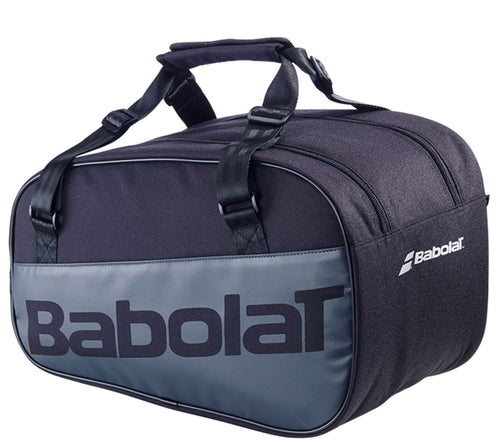
Bags. The RH Pro Padel Juan Lebrón is the full 62-litre tour bag — four rackets, shoes, kit, three compartments — in Lebrón's black colourway or the 2nd Gen blue and green. The Court S is the sensible 35-litre club bag that holds four rackets and stops there. The Court Lite backpack holds one racket and a laptop, built entirely from recycled materials, for the office-to-court commute.
Which Babolat should you buy?
You are new, or in your first year: the Counter Origin. If you are lighter-built or want pace at the net, the Air Origin. If you want a racket that lasts into year two, the Counter Vertuo. Both sell out between deliveries; when they do, the Air Vertuo is the nearest Babolat to either. Do not buy a Viper as a first racket.
You play every week and win on placement, defence and patience: the Counter Vertuo if comfort is your first criterion, the Counter Viper if you are advanced and want a carbon face with bite. Both are round; the Vertuo is the kinder frame by a distance.
You want an all-court racket that is quick in the hand: the Air Vertuo. It is the best-value Babolat on our wall for the club player who does a bit of everything and does not finish with the smash.
You are an intermediate who wants to start attacking: the Technical Origin+ if budget matters (a soft diamond, RRP $265), the Technical Veron 3.0 if you want a carbon-blend face and a firmer response. Both forgive a mistimed overhead in a way the Vipers will not.
You are a club attacker with a repeatable overhead: the Technical Viper Soft 3.0 — or the Viper Soft Juan Lebrón if you want the signature colours and accept that "soft" is relative. This is the Viper most attacking players should actually buy.
You are advanced, you generate your own racket-head speed, and you want the hardest, most direct frame: the Technical Viper 3.0 or the Viper Juan Lebrón 3.0. They are close; the Technical Viper adds the Carbon Power Layer inside the core. Go in knowing both are hard-cored and neither is arm-friendly. Their closest rivals on our wall are the adidas Metalbone 2026 and the Hirostar Alien Pro.
You are an advanced net player who wants to be fast rather than heavy: the Air Viper 2.6 — and accept that it does not cover for a late contact.
You have ever had elbow trouble: the Counter Vertuo, the Air Vertuo, the Technical Origin+, the Technical Viper Soft or either Veron — all rated arm-friendly on our pages. Not the Technical Viper, the Viper Juan Lebrón, the Counter Viper or the Air Viper. Our tennis elbow guide lists the arm-friendly frames across every brand we stock.
Still unsure? The racket finder scores every Babolat against your answers alongside every other racket we range, and our brand comparison puts Babolat next to NOX, Siux, adidas, Tecnifibre, Dunlop and Hirostar.
Buying Babolat padel in Australia
Genuine Australian stock with Babolat's Australian warranty. Our Babolat prices are set by a daily check against the everyday prices of established Australian padel retailers (how we price), and each product page shows the RRP beside our price. Same-day dispatch from the Gold Coast on orders placed before 1pm AEST, free shipping over $99 and free click and collect at Pacific Fair, Broadbeach. We have no demo rackets; if your club has a Viper on its wall, hit with it there first. Shop the Babolat range →
Frequently asked questions
What is the difference between Babolat Viper, Veron and Vertuo?
Feel and who they are for. Viper is the power line — diamond heads, high balance, the hardest cores — for attackers. Vertuo is the comfort-and-control line — soft cores, fibreglass faces, round or teardrop heads — for players who win on consistency. Veron sits between them: the diamond shape of the Viper on a more forgiving Carbon Flex face and a mid-hardness core, for intermediates who want to attack without a pro-level margin for error. Origin is the entry family below all three.
What do Technical, Counter and Air mean on a Babolat racket?
The build within a family. Technical is the full-specification version (usually the diamond, usually the firmest). Counter is the round, control-oriented version. Air is the lighter, quicker version with a lower balance. So a Counter Viper is a control racket built with Viper materials, and an Air Vertuo is a light, quick comfort racket.
What racket does Juan Lebrón use?
The Babolat Viper — his signature Viper Juan Lebrón 3.0 shares the Technical Viper 3.0's hard EVA core, 3K carbon face, diamond shape and 360–380g weight (Babolat list the Carbon Power Layer on the Technical Viper only), with the usual caveat that sponsored professionals sometimes compete with frames that differ from the retail model. The Veron Juan Lebrón and Viper Soft Juan Lebrón carry his name but are softer, more forgiving frames.
Is the Viper Soft Juan Lebrón actually soft?
Softer than the standard Viper, not soft by the standards of the market. padel.how rates its comfort 7/10, near average. If comfort is your first criterion, the Counter Vertuo and Air Vertuo are the Babolats built for it; the Technical Viper Soft is the softest frame that still keeps the full Viper diamond.
What does 2.6 or 3.0 mean?
Babolat's generation number. The 3.0 frames (Technical Viper, Technical Viper Soft, Technical Veron and the three Juan Lebrón models) are the 2026 generation of the Viper and Veron lines; the 2.6 frames (Counter Viper, Air Viper, Air Vertuo, Counter Vertuo) are the current generation of the Counter, Air and Vertuo builds. A higher number is a newer mould, not a better racket — the Counter Vertuo 2.6 is the right racket for far more players than the Technical Viper 3.0.
Which Babolat is best for beginners?
The Counter Origin — round, fibreglass, soft core, light — and it is the Babolat that appears in our beginner rackets guide. The Air Origin is the lighter alternative and the Counter Vertuo is the step-up first racket that will still suit you in your second year.
Are Babolat padel rackets good for tennis elbow?
Some are. The Counter Origin, Air Origin, Counter Vertuo, Air Vertuo, Technical Origin+, Technical Viper Soft, Technical Veron and Veron Juan Lebrón are rated arm-friendly on our pages (soft or medium cores, forgiving faces, Vibrabsorb in every frame). The hard-cored Technical Viper and Viper Juan Lebrón are not, and neither are the Counter Viper or Air Viper. No racket treats an elbow; what actually helps is here.
Specifications from Babolat's published product information, verified 17–24 September 2026 and shown with a spec-checked date on every product page. Independent scores quoted from Padelful, padel.how, Padel Racket Lab and Zona de Padel, and are their opinions, not ours. Prices on the cards are live from our store and are checked against Australian retailers every morning; the dollar figures in the text are RRPs.