Five padel balls, all $14 a can or less, all shipped same day from the Gold Coast. Four are FIP-approved, and adidas do not publish an approval for the fifth; four are fast balls and one is a medium-speed ball built for control and durability. This is how they differ, which one suits the way you play, and the answers to the questions Australians actually type into Google about padel balls — including the tennis-ball one.
The short answer
| You want… | Buy | Why |
|---|---|---|
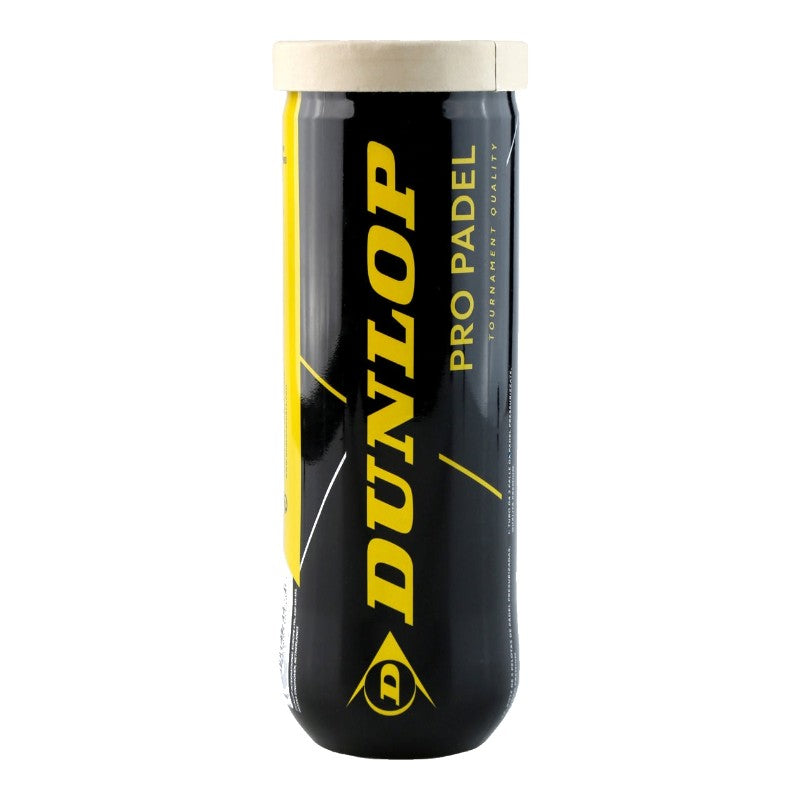
| One ball for everything, cheapest per can | Dunlop Pro | FIP-approved to February 2027, padel-specific core, the lowest price on our shelf. The ball we would hand a club running a social night. |
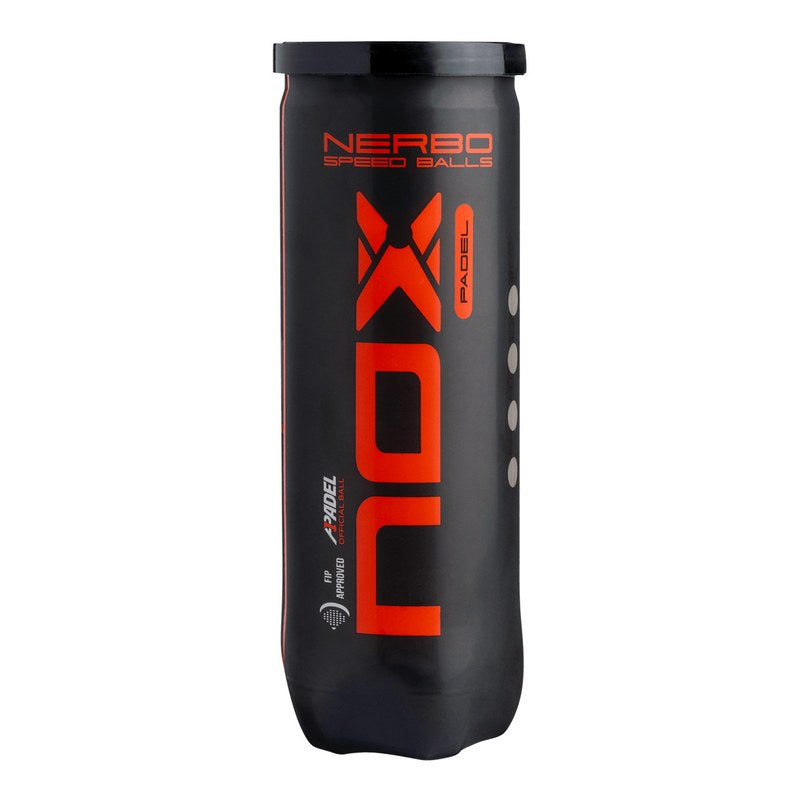
| A fast, lively ball for competitive play | NOX Nerbo | FIP-approved, official ball of the A1 Padel professional circuit, built to hold pressure longer than a standard club ball. |
| The quickest ball, or you play indoors / in winter | Siux Neo Speed | The higher-pressure of Siux's two Neo balls, marked for cold conditions and a faster game, rated for two to three matches at peak. |
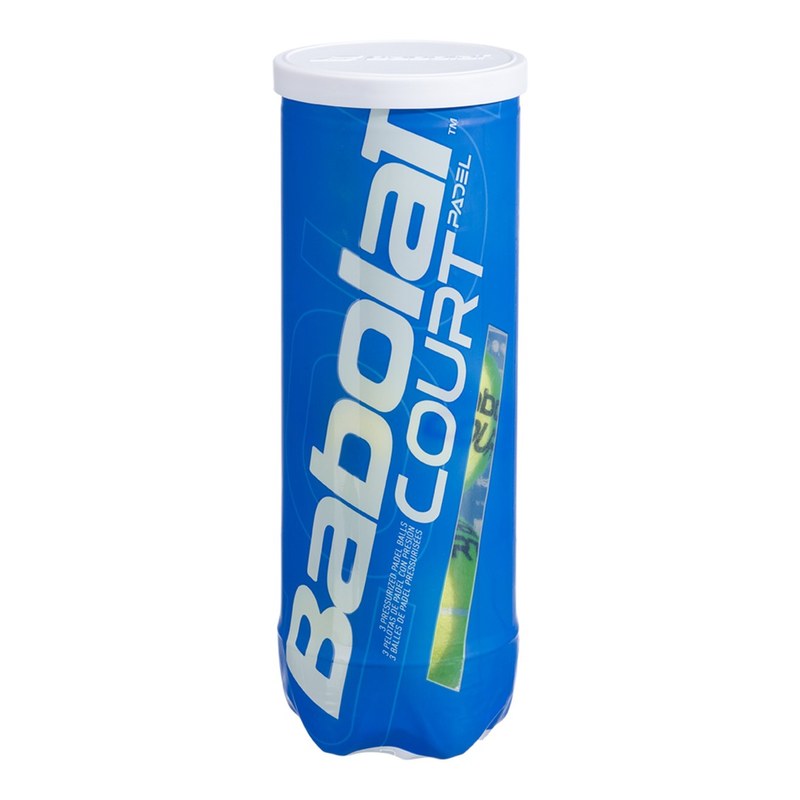
| A medium-speed ball for control players, clubs and coaching | Babolat Court | FIP-approved, durable felt, a lively but not explosive bounce. The former official ball of the APT Padel Tour, and the one clubs and coaches buy for consistency. |
| A fast, high-bouncing ball for slow or indoor courts | adidas Speed RX | 58g, a 144–147cm bounce, the official ball of the Premier Padel Dubai P1. adidas publish no FIP approval, so it is not the ball for sanctioned play. |
We have ranked these on the published specification, on federation approval, on what the professional circuits use and on price per can — not on a laboratory test, because we do not have one and neither does anyone else selling padel balls in Australia. Where a manufacturer does not publish a figure (pressure retention, for example) we say so rather than make one up.
What actually makes one padel ball better than another
A padel ball is a pressurised rubber core inside a felt cover, and it fails in one of two ways: the pressure leaks out and the bounce dies, or the felt wears smooth and the ball skids and flies. Almost every ball on the market dies of the first one long before the second. So when people ask which padel ball is best, what they are really asking is which one holds its bounce longest, and the honest answer is that no manufacturer publishes a pressure-retention number you could compare. What they publish instead is three things worth reading:
- Federation approval. The International Padel Federation (FIP) tests balls for size, weight, bounce and pressure and publishes a certified list. An approved ball is guaranteed to behave like a padel ball is supposed to, and it is the only ball you can use in a sanctioned tournament. Four of the five balls we stock are FIP-approved; adidas do not publish an approval for the Speed RX.
- Core. A padel-specific core is built for padel's lower pressure (roughly 10–11 psi against a tennis ball's 14). A rebadged tennis core in a padel can is the cheap way to make a padel ball, and it tends to play too lively then die fast. Dunlop and Siux both state a padel-specific construction.
- Speed. Manufacturers grade their balls fast or standard. Four of ours are at the faster end — Dunlop describe the Pro as faster with more bounce than traditional padel balls, NOX call the Nerbo fast, the Neo Speed is Siux's quick ball, and the Speed RX is adidas's fast, high-bounce ball. The Babolat Court is the medium-speed one, built for control and consistency rather than pace, which is why clubs and coaches buy it.
Felt quality decides how the ball feels off the racket and how long it stays consistent under a hard hitter, but on a club court in Australia the pressure goes first every time. Buy for bounce retention and approval, not for the felt.
The five balls, one at a time
1. Dunlop Pro — best overall and best value
Dunlop's competition ball, and the one we would put at the top for almost everyone. It is on the FIP certified list (approved 6 February 2025, valid to February 2027), it uses a padel-specific core rather than a rebadged tennis core, and it wears Dunlop's premium synthetic cloth. Dunlop pitch it as faster and higher-bouncing than a traditional padel ball and built for durability. It is also the cheapest can we sell, which for a consumable that you will buy twenty times a year matters more than any single feature. The can ships with a paper lid rather than a plastic cap, which is a small thing until you have a drawer full of plastic caps.
Who it suits: anyone. Club nights, leagues, coaching, weekend social padel. If your tournament requires an approved ball, this qualifies. If you run a club and need cartons rather than cans, ask us — we can quote a box of 24.
2. NOX Nerbo — best for competitive players who like a fast game
FIP-approved and the official ball of the A1 Padel professional circuit, which is the strongest real-world endorsement any of these five carries. NOX build it for a quick game — a lively, stable bounce for players who want the ball coming through rather than sitting up — and they state that it holds its pressure longer than a standard club ball, which is the difference between a can lasting one session and three. The felt is a high-durability premium weave.
Who it suits: intermediate and advanced players, anyone who plays league or competition, and anyone whose club balls have been going dead by the second set. If you defend a lot and prefer a ball that sits up for you, the Dunlop is marginally the safer pick; if you attack, this is the one.
3. Siux Neo Speed — best for indoor courts, winter and attackers
Siux make two versions of their FIP-approved Neo ball and this is the quick one — marked Neo S on the can. It runs a higher internal pressure than the standard Neo, so it comes off the racket direct rather than muted, and Siux print the summary straight on the tube: recommended for a faster game, pressure loss resistant, adapted for low temperature conditions. Siux rate it as holding its characteristics for roughly two to three matches, which is more than most club balls manage. It was developed with Franco Stupaczuk, Sanyo Gutiérrez and Patty Llaguno.
The honest caveat: this is the fastest ball on the page, and on a 35-degree Queensland afternoon it plays very lively. That is exactly what an indoor player at Forest Glen or Currumbin wants, and exactly what a Brisbane summer social night probably does not. If you play a lot of winter padel or under a roof, it is the best ball we stock. If you are still building control, a fast ball will get away from you — start with the Dunlop.
4. Babolat Court — best for control players, clubs and coaching
Do not read it as the budget option. Babolat Court is FIP and FFT homologated, and it was the official ball of the APT Padel Tour — the professional circuit that became A1 Padel, whose current ball is the NOX Nerbo above. Babolat pitch it on speed and durability for both beginners and professionals; the retailers who have played it describe a lively, consistent pressurised bounce that sits in the middle of the speed range rather than at the fast end, and a felt that holds its playing properties noticeably longer than an average ball. That combination — approved, consistent, durable, not explosive — is exactly why clubs and coaches buy it by the case for training and lessons. It is also the ball for a control player who finds the three fast balls above getting away from them. Stock on this one comes and goes — the card below shows whether we have it in today.
5. adidas Speed RX — best for slow and indoor courts
adidas make two padel balls, and this is the fast one: a pressurised 58g ball with a wool-and-nylon felt over a high-strength foam core and high-density rubber, and a quoted bounce of 144–147cm, at the upper end of the padel specification. It is the ball adidas put on tour: the official ball of the Premier Padel Dubai P1. On court that means a ball that comes off the glass quicker and sits up higher than the Babolat Court, and reviewers agree it is at its best on indoor or slow outdoor courts. Durability is decent rather than exceptional — open a can per session rather than nursing one for a fortnight. It is $14 a can.
The honest caveat: adidas do not publish a FIP or ITF approval for the Speed RX, so we do not claim one. If your tournament or league requires an approved ball, buy the Dunlop Pro or the NOX Nerbo. For social padel on a slow court, or under a roof, it is a lively alternative to the Siux. The adidas guide →
Every ball we stock, live prices


Side by side
| Dunlop Pro | NOX Nerbo | Siux Neo Speed | Babolat Court | adidas Speed RX | |
|---|---|---|---|---|---|
| FIP approved | Yes (to Feb 2027) | Yes | Yes (stated by Siux) | Yes (FIP/FFT) | Not published |
| Speed | Fast | Fast | Fastest — higher pressure | Medium | Fast — high bounce (144–147cm) |
| Core | Padel-specific | Pressurised rubber | Higher pressure than standard Neo | Pressurised rubber | High-strength foam, high-density rubber |
| Felt | Premium synthetic | High-durability premium | Wear-resistant weave | Durable felt | Wool and nylon |
| Manufacturer's durability claim | "Extreme durability"; no figure | Holds pressure longer than a club ball; no figure | Peak for 2–3 matches | "Impressive durability"; no figure | No figure; reviewers call it decent rather than exceptional |
| Used by | Club and league play | A1 Padel professional circuit (current) | Team Siux | APT Padel Tour (before it became A1 Padel); clubs and coaches | Premier Padel Dubai P1 (official ball) |
| Best for | Everyone; best value | Competition, attackers | Indoor, winter, attackers | Control players, clubs, coaching | Slow and indoor courts, attackers |
| Balls per can | 3 | 3 | 3 | 3 | 3 |
Can you use tennis balls for padel?
You can hit one with a padel racket, but you should not. A tennis ball is pressurised to about 14 psi and a padel ball to about 10–11, and a padel ball is fractionally smaller. On a 20 metre padel court with glass walls that extra pressure is the difference between a lob that lands and a lob that sails out, and between a ball off the back glass that you can play and one that flies past you. Coaches sometimes use pressureless or depressurised tennis balls for drills with beginners because they die slower, and that is fine for a lesson. For a match, use a padel ball, and if the match matters use an approved one.
How long does a can of padel balls last?
A pressurised ball starts losing pressure the moment the can is opened. For competitive play, expect two to four hours before a good ball is noticeably flat; for social padel, a can will see you through several sessions over a month before the bounce is obviously gone. Heat shortens all of that — a can left in a car boot on the Gold Coast in January can be flat before you open it. Keep unopened cans indoors and out of the sun. How to tell when a ball is finished, and why sealed cans age too →
Where to buy padel balls in Australia
Three places, honestly ranked. Your club, if it has a pro shop: it will carry one or two brands and you can buy a can on the way to the court. Us: the five balls above, same-day dispatch on orders placed before 1pm AEST on a business day, free shipping over $99 and $9.95 below it, and free click and collect at Pacific Fair on the Gold Coast, ready within three hours on weekday orders placed 9am–5pm where the stock is on hand. And the big-box sports retailers, which as we write carry a thin or non-existent padel range in most stores — worth a phone call before you drive, and check that what they have is a padel ball and not a tennis ball in a padel sleeve.
A can is under the $99 free-shipping line on its own. Three or four cans with a grip and a frame protector tip you over it, which is how most of our ball orders arrive — and it is a better way to buy balls anyway, because you should never be one can away from a dead session.
Buying balls for a club, a coach or a league
If you go through more than a couple of cans a week, buy by the carton. We can quote 24-can boxes of the Dunlop Pro for clubs and coaches — get in touch with roughly how many cans you use a month and we will come back with a price and a delivery date. Coaches and social organisers can also join our referral programme: your players get 5% off and you are paid 5% of what they spend, which on a club that buys its balls through us adds up. Details on the coaches and community page →
Frequently asked
Which padel ball do the pros use? Whatever their tour's ball sponsor is. The A1 Padel circuit plays the NOX Nerbo, which is one of the reasons it is on this page. Premier Padel plays its own official partner's ball; the adidas Speed RX above was the official ball of the Premier Padel Dubai P1.
Are pressureless padel balls any good? They last far longer but they play heavier and slower, and they are not approved for competition. Fine for a ball machine or a beginner's lesson; not what you want for a match. None of the five balls above is pressureless.
What does FIP-approved actually mean? The International Padel Federation has tested that batch of the ball for weight, size, bounce height and pressure, and it is on their published list. It means the ball behaves like a regulation padel ball and is legal in sanctioned events. It does not, on its own, mean the ball lasts longer. Four of the five balls on this page carry it; adidas do not publish one for the Speed RX.
Do I need a new can for every match? For a tournament or a league match, yes, and most competitions supply one. For social padel, no — a can that has had two or three sessions is fine until the bounce is visibly lower than a fresh ball's, which is the simplest test there is: drop one of each from shoulder height and compare.
Sorted on balls, not sure on the racket?
Five quick questions, scored against every racket we stock — takes 60 seconds. Same-day dispatch from the Gold Coast, or collect at Pacific Fair.