
Padel and pickleball are the two fastest-growing racket sports in Australia, they both arrived in force at roughly the same time, and they are constantly mistaken for each other. They are not remotely the same game.
This guide sets them side by side — the court, the gear, the rules, the cost, the physical demands, and how big each one actually is in Australia. No brand spin: we sell padel equipment, and we'll still tell you plainly where pickleball is the better fit.
The 30-second answer
Padel is played in an enclosed glass and mesh box roughly the size of a tennis service area, almost always as doubles, with tennis scoring. The walls are in play — the ball rebounds off the glass and you keep playing. It is faster, more physical, and skews younger.
Pickleball is played on a small open court with no walls, as either singles or doubles, with its own scoring system to 11. It has two rules that define it — the two-bounce rule and the non-volley zone ("the kitchen") — neither of which exists in padel. It is the easier entry point and skews older.
If you want long rallies, a social doubles game and a proper cardio workout, padel. If you want the gentlest possible start, the cheapest gear and a court at your local community centre, pickleball.
The court
This is the single biggest practical difference, and it drives almost everything else.
| Padel | Pickleball | |
|---|---|---|
| Court size | 20 m × 10 m | 13.41 m × 6.10 m (44 ft × 20 ft) |
| Playing area | 200 m² | ~82 m² |
| Enclosed? | Yes — glass walls and mesh, both in play | No — open court |
| Net height (centre) | 0.88 m | 0.86 m (34 in) |
| Singles or doubles | Doubles (FIP rules are written for pairs) | Both, on the same court |
| Typical surface | Artificial grass with sand infill, or synthetic/cement | Acrylic-coated hard court, gym floor, or lines on an existing surface |
A padel court is about 2.4 times the playing area of a pickleball court — and it has to be purpose-built, with glass, fencing and lighting. A pickleball court can be lines painted on a surface you already own. In Australia roughly one in five pickleball games is played at a multi-use facility on temporary lines.
That difference in capital cost is the real reason the two sports have spread so differently here, and it matters more than anything about the gear.
The gear — and one thing almost everyone gets backwards
| Padel racket | Pickleball paddle | |
|---|---|---|
| Strings | None — solid, perforated face | None — solid, no holes |
| Max length | 45.5 cm | 43.18 cm (17 in) |
| Max thickness | 38 mm | Unregulated (typically 13–16 mm) |
| Construction | EVA foam core, carbon or fibreglass face | Honeycomb core, rigid face |
| Wrist cord | Mandatory | Not required |
| Typical AU price | ~$140–$659 | ~$60–$440 |
Now the bit that trips people up. The pickleball is the bigger ball, not the smaller one. People assume the little plastic wiffle ball must be smaller than a padel ball. It isn't:
- Pickleball: 7.29–7.54 cm across, but only 22–27 g — a light, hollow, perforated plastic ball
- Padel ball: 6.35–6.77 cm across and 56–59 g — a pressurised felt ball, essentially a slightly smaller, slightly softer tennis ball (around 10–11 psi versus a tennis ball's ~14 psi)
So the pickleball is wider but weighs less than half as much, and bounces about half as high. That is why pickleball is slower and why a padel ball feels so familiar to anyone who has played tennis. We go deeper on this in Padel Balls Explained.
On price, the honest picture: the top end is similar, but padel's entry point is higher (~$140 versus ~$60 for a starter paddle). Padel balls are cheaper per can but wear out faster — the wall impacts and long rallies knock the pressure out of them. Either way, in Australia the real cost difference is court hire, not equipment.
The rules that actually define each sport
Padel: the walls are in play
This is the whole sport. After the ball bounces on your side of the court, it can rebound off your glass and you play it on the way back out — the wall rebound doesn't count as a second bounce. It means balls that would be winners in tennis simply come back, and rallies keep going.
Two things beginners get wrong:
- Your shot must bounce on the opponents' floor first. If you smash it straight into their glass without a bounce, you lose the point.
- You may play the ball off your own glass to send it back over the net — that's legal. But if your shot touches your own metal fence, you lose the point.
On courts built with enough run-off space, players can even run out the side gate and play the ball back in from outside. It's spectacular on TV — but most Australian club courts aren't built with the required safety zone, so check before you count on it.
Pickleball: the two-bounce rule and the kitchen
Two rules with no padel equivalent at all:
- The two-bounce rule: the serve must bounce, and the return must bounce, before anyone may volley.
- The non-volley zone ("the kitchen"): a 2.13 m strip either side of the net where you may not volley. You can stand in it — you just can't hit the ball out of the air there.
Padel has neither. There is no kitchen, and once the serve has been returned you may volley whenever you like. Padel's only bounce restriction is on the serve itself: the receiver must let it bounce.
Scoring
Padel uses tennis scoring — 15, 30, 40, game; six games to a set; tie-break at 6–6; best of three. Clubs vary on how they handle deuce: traditional advantage, a single "golden point", or the new Star Point system the professional tour adopted in 2026. Ask before you start.
Pickleball uses side-out scoring — only the serving team can score, games to 11, win by 2, and the score is called as three numbers. You'll hear about rally scoring; as of 2026 it is still only an optional, provisional tournament format, not the standard.
Which is harder work?
Padel, clearly — and there is peer-reviewed data behind that rather than just opinion.
A 2023 systematic review in Frontiers in Psychology measured padel rallies at 9–18 seconds with average heart rates of 127–159 bpm — comparable to tennis on heart rate, but with lower blood lactate, meaning sustained moderate-to-high effort rather than repeated maximal bursts. A 2025 review comparing the two sports directly found pickleball's smaller court and slower ball "reduces physical intensity while emphasising social interaction".
The same research found a clear age split: padel peaks among players aged roughly 35–43; pickleball skews to over-50s. Neither is better — they're just aimed at different days of your life.
Which is easier to learn? Pickleball, on the smallest court with the least ground to cover. But padel is close behind, and for a specific reason: the underarm serve removes tennis's hardest skill, and the walls keep the ball alive, so beginners get real rallies within their first couple of sessions.
The injuries are different in kind
Worth knowing before you pick:
- Padel injuries are mostly overuse — elbow first (the same lateral elbow tendon problem tennis players get), then shoulder, knee and ankle. Around 40% of players report at least one injury a year. If this is your concern, read Padel and Tennis Elbow — racket weight and core hardness genuinely matter.
- Pickleball injuries are mostly falls — a US ten-year study found the mean age of an injured player was 64, with 91% of injuries in players 50 and over, and most fractures coming from falling onto an outstretched hand.
Different risk profiles driven by different player demographics, not one sport being more dangerous than the other.
Which is actually bigger in Australia?
Honest answer: pickleball has the bigger base; padel is growing from behind at a similar or faster rate. Anyone claiming a decisive winner is overselling the data, because the two governing bodies don't measure participation the same way.
- Pickleball: roughly 155,000 active participants (2024/25), with courts in all eight states and territories — a good share of them lines on existing multi-use surfaces. Average player age around 56.
- Padel: over 90,000 Australians have now played, up about 50% year on year. Court numbers went from roughly 100 at the end of 2025 to somewhere between 150 and 190 by late 2026 depending on whose count you use, across roughly 38–41 venues — concentrated in NSW and Victoria. Padel was formally recognised as a sport by the Australian Sports Commission in 2025.
For context, padel had just five clubs in Australia in early 2023. That is the real story — not the absolute number, but the slope.
Globally the picture flips. Padel is enormous in Spain, Italy, Argentina, Sweden and the Middle East — the International Padel Federation counts around 35 million players and 77,300 courts. Pickleball is overwhelmingly American, with 24.3 million US players. Tellingly, in the US in 2025 pickleball grew 1.3% while padel grew 14.5% off a much smaller base.
So which should you try?
Try pickleball if you want the lowest possible barrier to entry, cheap gear, a court close by, a gentler workout, or you're over 50 and easing into racket sports.
Try padel if you want a proper sweat, long rallies from your first session, a sociable doubles-only game, or you play (or played) tennis and want something that rewards that background without punishing your shoulder the way a tennis serve does.
And the honest note: plenty of people play both. They're complementary, not rivals.
Starting padel — what you actually need
Less than you'd think. A racket, a can of balls, court shoes and a grip. Most clubs hire rackets for your first few sessions, so there's no rush to buy before you know you like it.
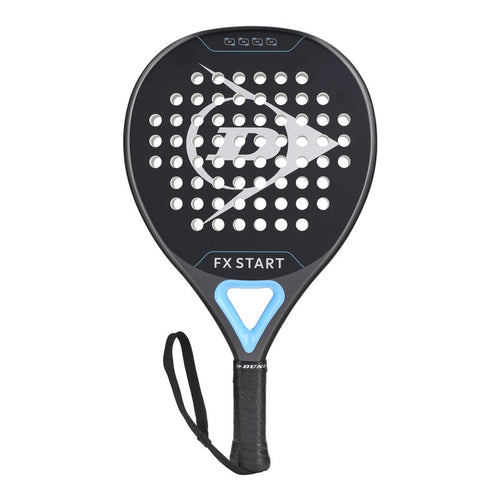
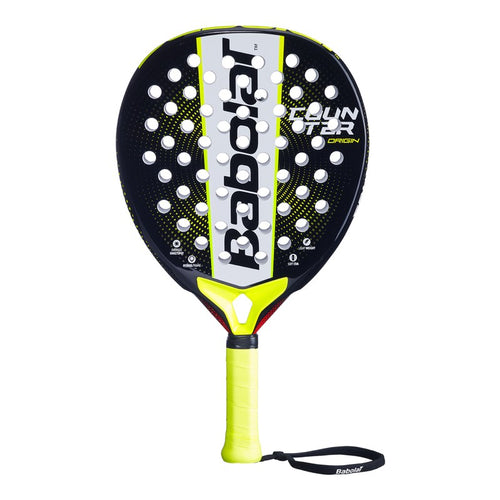
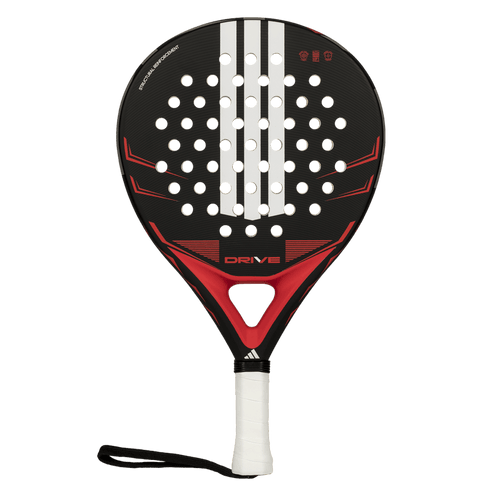
When you are ready, these are sensible first rackets — forgiving, round or hybrid shaped, and not the stiff pro frames that punish a developing technique:
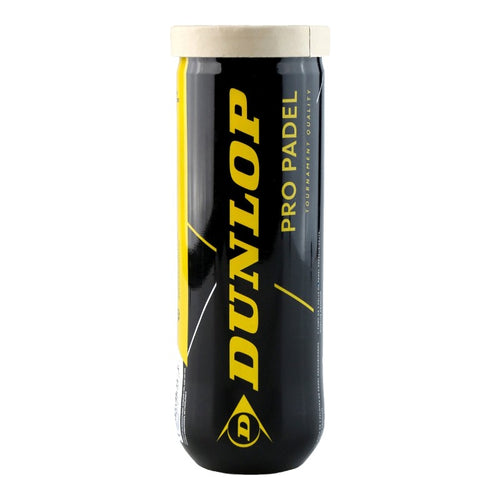
And balls — any FIP-approved ball is fine to learn with:
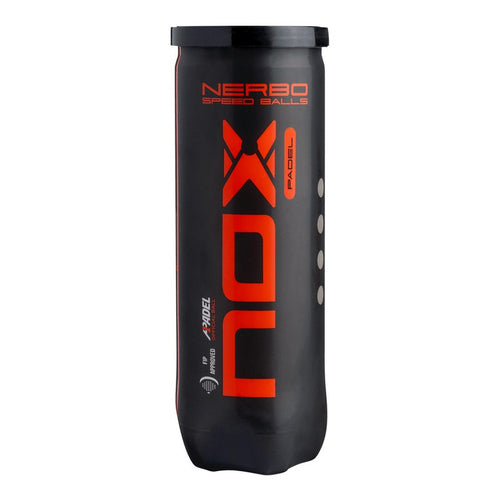
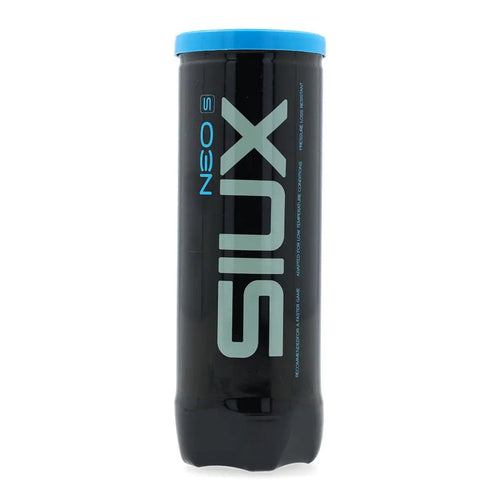
If you want to understand what you're buying before you spend, start with How to Choose a Padel Racket and Round vs Teardrop vs Diamond.
Where to play padel in Australia
We keep an up-to-date directory of open and upcoming courts: Padel Courts in Australia. If you're local to us, start with Padel on the Gold Coast, Brisbane or the Sunshine Coast.
We're an online shop based in Broadbeach — orders placed before 1pm AEST go out the same day, and there's free click-and-collect from our counter at Pacific Fair if you're on the Coast.
Court, participation and rule figures in this article are current as at September 2026 and drawn from the International Padel Federation, USA Pickleball, Padel Australia, Tennis Australia and published participation research. Where sources disagree we've given the range rather than picking a favourite.